On June 23rd, 2021 fifteen colonies of five different genotypes of endangered staghorn corals (Acropora cervicornis) were transplanted to the rubble zone in front of the Coral City Camera by Rescue a Reef, a citizen science program based at the University of Miami. The goal of this experiment was to try and identify stress-tolerant strains of staghorn corals to better inform Rescue a Reef of the strains best suited for near-shore habitats. We anticipated that not all the strains would survive (or perhaps none would survive), but given that this was a science experiment using clones, any mortality would be offset by the fact that dozens to hundreds of more clones exist in Rescue a Reefs offshore coral nurseries. The results greatly exceeded our best expectations!
As far as we are aware, this is the longest continuous in-situ growth timelapse of corals ever made!
This timelapse begins on June 28, 2021, just a few days after transplantation and replacing the CCC (which slightly altered the perspective). Over the course of the next several weeks, tissue die-off progressed rapidly across many of the colonies (Seen as bright white skeleton before being overgrown with brown algae). However, after a month of acclimation, the staghorn corals stabilized and adapted to their new Anthropogenic habitat despite water temperatures exceeding 90 (32C) in August and September (but no significant coral bleaching was observed!). Over the course of this time, the perspective shifts slowly as the Camera slowly subsides in the sediment and leans away from the rubble zone (due to the powerful currents in the area).
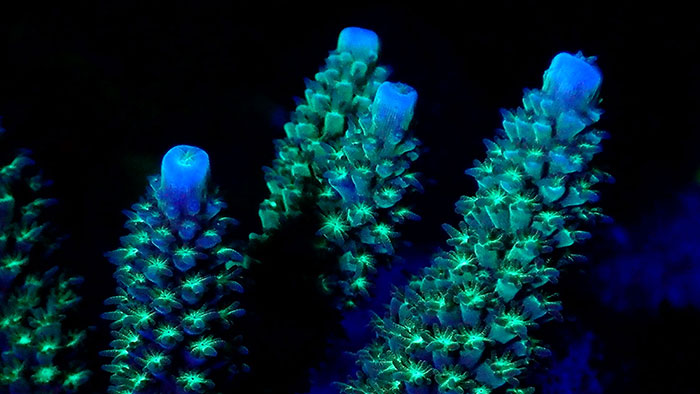
Ongoing research with University of Miami, NOAA, and Penn State University is now looking into the microbiomes of these staghorn corals to compare how they may have changed from their offshore clones. We observed on a night dive in September of 2021 while filming the ‘Coral City Fluorotour‘ that these staghorn corals were expressing fluorescent green proteins which is unusual for the species, and isn’t observed in their offshore counterparts. Unlocking the secrets of these urban-adapted ‘super corals’ is just the next step in understanding their remarkable resilience. Perhaps the site around PortMiami is ideal for evolutionarily assisting and stress-adapting corals before out-planting to the beleaguered nearshore reefs around Miami.
Just as the new coral growth is interesting to watch, equally interesting is to witness the erosion and disappearance of the dead staghorn branches of the colony closest to the Camera. This erosion occurs from the parrotfish whose powerful beak-like teeth can rasp the surface layer of algae while crunching the limestone skeleton (and then pooping sand). The club-tipped finger coral (Porites porites) in the lower right corner of the view is also interesting to observe over the year, as the parrotfish are fond of eating the healthy branch tips, rendering them very club-like in Coral City!
Playback speed is at 15 frames (days) per second (about one month per 2 seconds).
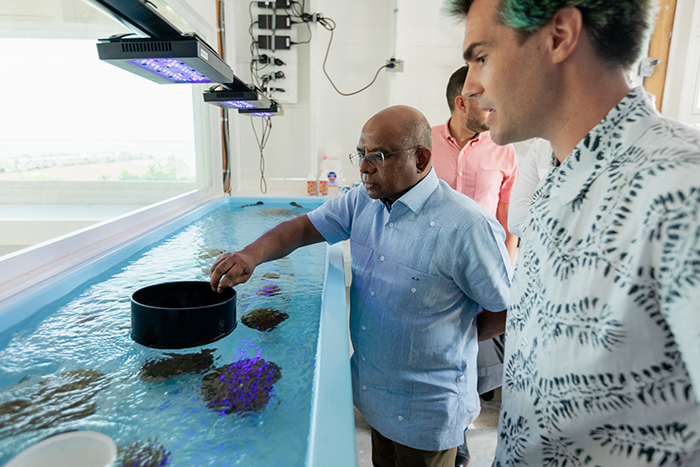
President of the UN Geneva General Assembly, Abdulla Shahid and Colin touring the Center for Marine Innovation upon its completion.
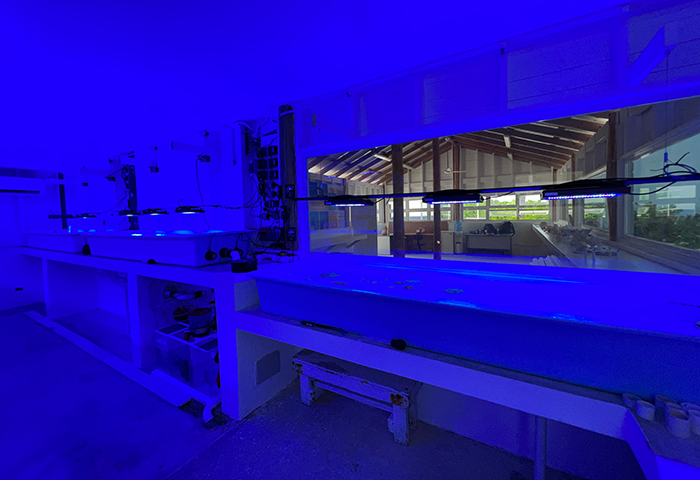
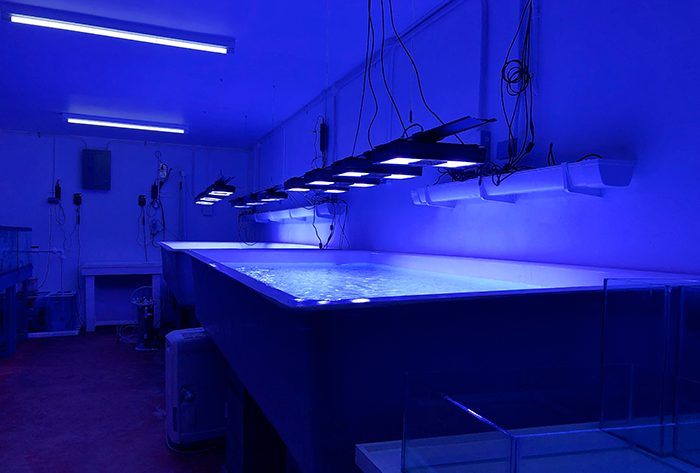
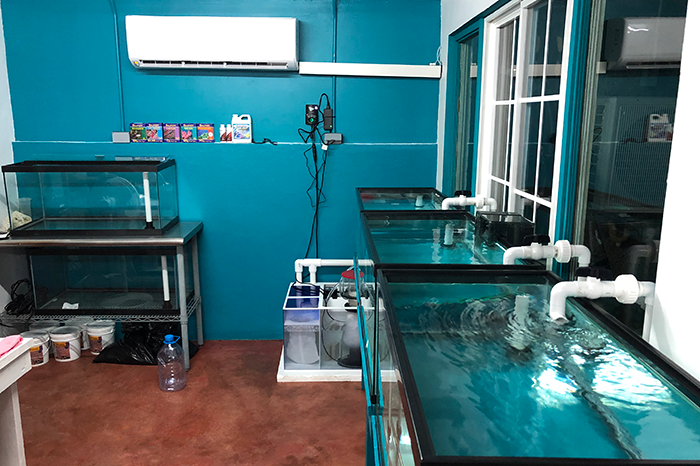
Coral Morphologic was recently commissioned by Fundación Grupo Puntacana (FGPC) at the Punta Cana Resort & Club to overhaul and upgrade their coral restoration lab infrastructure at their Center for Marine Innovation with funding support from the German GIZ. This project entailed re-plumbing an outdoor greenhouse that is capable of running either closed-loop, or pulling water directly from the ocean for easy flushing and water changes. Additionally, a climate-controlled indoor lab was also constructed utilizing the latest technology for coral aquaculture, including Ecotech G5 XR30 LED lights, Apex Neptune aquarium computers, Reef Octopus protein skimmers, and calcium reactors. This improved lab infrastructure is enabling marine scientists at FGPC to generate thousands of microfrags of massive reef-building species such as brain and star corals. These important corals will add needed biodiversity to their long-running reef restoration program that has successfully out-planted thousands of staghorn corals grown on their underwater nursery tables offshore.
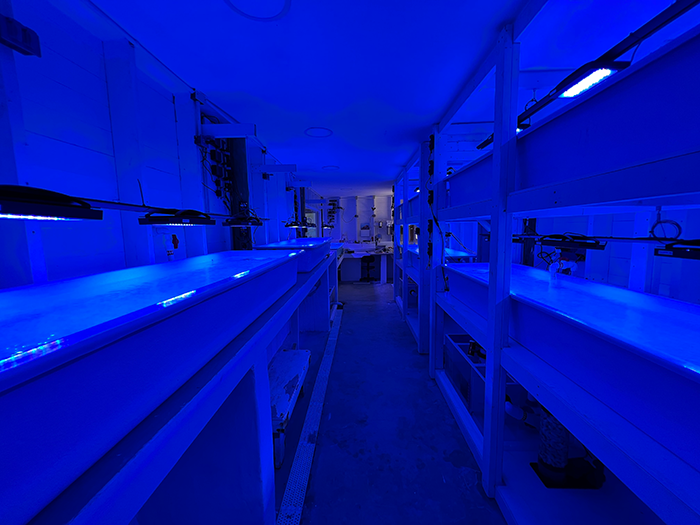
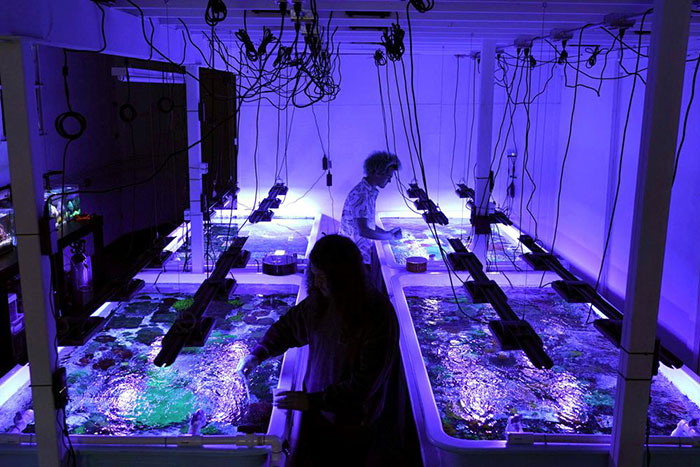
The climate-controlled indoor coral microfragmentation systems and wet lab feature state-of-the-art LED and aquarium technology to keep freshly fragmented corals healthy.
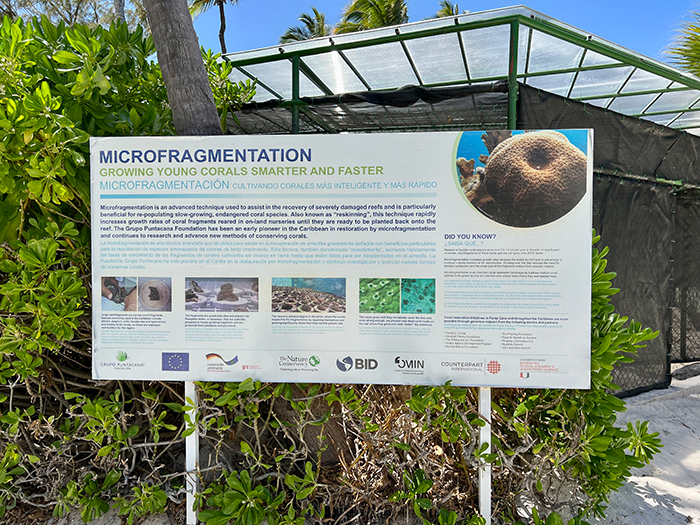
Coral microfragmentation: growing corals smarter and faster.
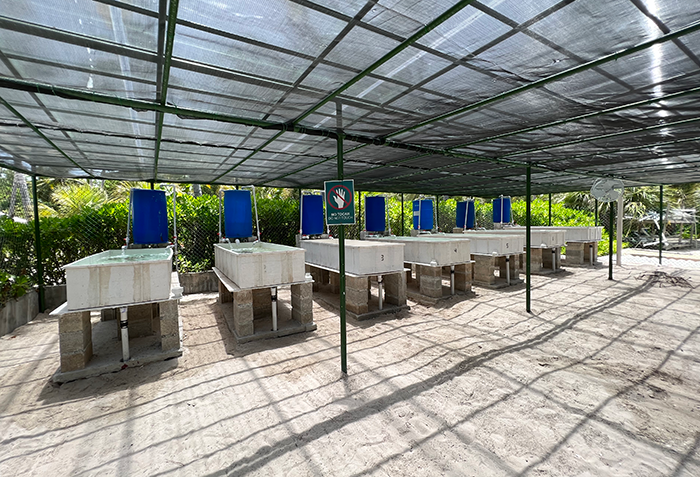
Outdoor microfragmentation systems are utilized for long-term grow-out before the corals are transplanted back onto Puntacana’s reefs.
The indoor coral microfragmentation systems and wet lab were designed with a viewing window that enables tourists to observe marine scientists microfragging and growing corals, without interrupting their work.
We are excited to present Illuminating Coral, an eight-episode educational course created with our longtime collaborator John McSwain during the height of the COVID-19 pandemic. The course, made exclusively with Parley for the Oceans, dives into the lives’ of coral, sheds light on their vital role in our global ecosystem, and offers solutions on how humans and coral can live in symbiosis both now and in the future. Watch Illuminating Coral in full via the Parley Ocean School @ https://edu.parley.tv/course/illuminating-coral/
The morning of Wednesday, May 11th Colin will join Swati Thiyagarajan and Barton Seaver in conversation on how the ocean is poised to be a hero in the fight against climate change, with natural systems that help undo the damage human activity has caused.
Wallcast showings of Coral City Fluorotour follow the evening speaking sessions, beginning at 8pm, and are free and open to the public. For more information, programming, and to obtain passes, please visit www.aspenideasclimate.org
A still from Coral City Fluorotour. Fluorescent staghorn coral at the Coral City Camera site.
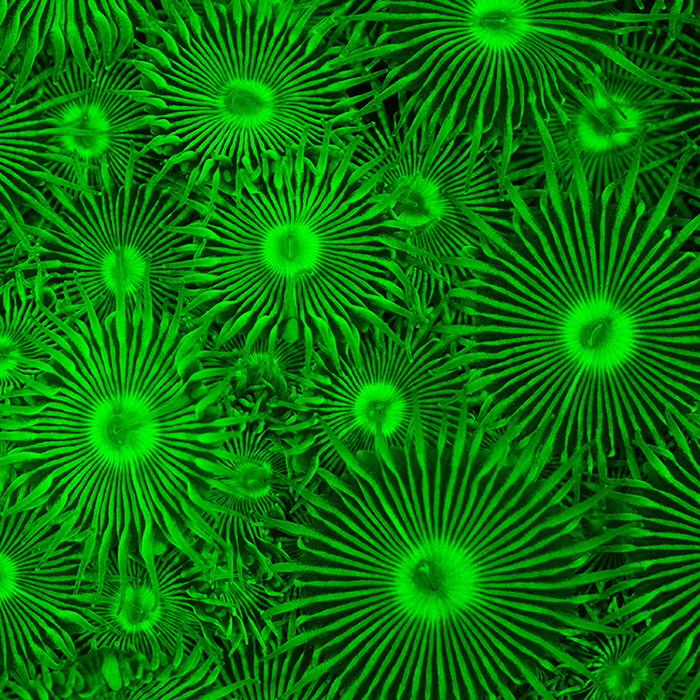
Undescribed fluorescent Palythoa species photographed along the shoreline of PortMiami.
We are happy to announce the publication of a scientific paper in Springer Nature analyzing the presence and potency of palytoxin (PLTX) in Palythoa spp. and Zoanthus spp. Zoantharians conducted by the Mediterranean Institute of Oceanography and Coral Biome in Marseilles, France. PLTX is one of the most potent toxins known on the planet. It is an extremely large and complex organic compound that has been described by biochemists as the ‘Mt. Everest of organic synthesis’. An organism that naturally produces large amounts of PLTX is of great importance for research scientists to better understand its pharmacology. PLTX has been found to have toxic effects on head and neck tumors, and therefore warrants further pharmaceutical investigation.
Initially, this compound was blue-prospected in Hawaii where native Hawaiian people used the the mucous of Palythoa found in a very specific (and taboo) tide pool (known as limu-make-o-Hana, the ‘seaweed of death of Hana’) to coat their spear points before battle. So taboo was this tide pool for outsiders, that when scientists sampled the Palythoa in 1961, they found their lab burned to the ground on the same day. A reminder to scientists to respect native wisdom, culture, and practices when performing science on other cultures’ land!
In this paper we found that an undescribed species (Palythoa aff. clavata) we sampled from PortMiami in 2012 was found to have five times the concentration of the notorious Hawaiian species Palythoa toxica. The experiment also tried to determine whether PLTX was produced by symbiotic microbial symbionts / zooxanthellae, or by the organism itself. Highest concentrations of PLTX were found within the tissue itself, and isolated cultures of zooxanthellae from these polyps failed to produce PLTX in the laboratory. This suggests, but does not confirm, that the Palythoa polyps themselves are producing this toxin. While the mechanism of its biosynthesis remains unknown, it highlights how Miami’s urban marine environs hold important scientific discoveries still waiting to be uncovered.
We are proud to present Coral City Flourotour, our first short film in 3 years, and our first in-ocean filming project using techniques developed in the CM lab / studio. Coral City Flourotour documents the highly fluorescent corals living near the Coral City Camera site at PortMiami.
These urban corals are not just survivors, but pioneers who have self-recruited to the boulder shoreline deployed to the Port in 2010. Some of the larger brain corals featured were previously transplanted from other urban habitats by Miami-Dade County DERM. Coral Morphologic has documented 27 of Florida’s 48 stony coral species living at this site, as well as more than 170 species of fish documented via the CCC.
Critically endangered staghorn corals (Acropora cervicornis) were transplanted to the site in June 2021 by University of Miami’s Rescue a Reef program. The fluorescence survey conducted in this film revealed they’ve activated fluorescent proteins which are not normally expressed in offshore waters. Scientists from UM and NOAA are now seeking to understand what changes these corals have undergone adapting to life in such an anthropogenically-altered environment, as it may have larger implications related to the restoration of Floridian and Caribbean reefs. Recently published research by NOAA has discovered the corals living in these urbanized environments have made important adaptations that enable them to thrive in Miami’s coastal waters.
Special Thanks to Bridge Initiative, Bas Fisher Invitational, PortMiami, Biscayne Bay Pilots, Miami-Dade County, NOAA AOML, Rescue a Reef
“A Green Jade Lake is envisioned as an experiential journey that invites the visitor to wander through its different rooms and landscapes and to reflect on the idea of nature in the contemporary moment. In a situation of ecological fragility, we need to rethink the relationships and flows that are established between humans, ecosystems and their environments, and to take into consideration the new complexities that exist between the natural and the artificial.
Taking the image of a forest as its starting point, as the threshold beyond which categories become entwined, the exhibition includes experience, fiction, artistic work and research to allow us to explore new ways in which we can interact with the planet. Addressing different subjects such as coexistence, botany, territorial policies or the aesthetics associated with the representation of nature, the exhibition is understood as a constellation that creates open and transformative universes.
This exhibition proposes a new contemporary approach to nature in which all audiences, all bodies and all voices can participate.”
Artists: Coral Morphologic, Daniel Steegmann Mangrané, Fabian Knecht, Geocinema, Gerard Ortín Castellví, Jana Winderer, Jessica Sarah Rinland, Jonathas de Andrade, Lola Zoido, Maria Nolla, Mauricio Freyre, Michael Wang, Mónica Mays, Tomás Díaz Cedeño, Ursula Biemann, +
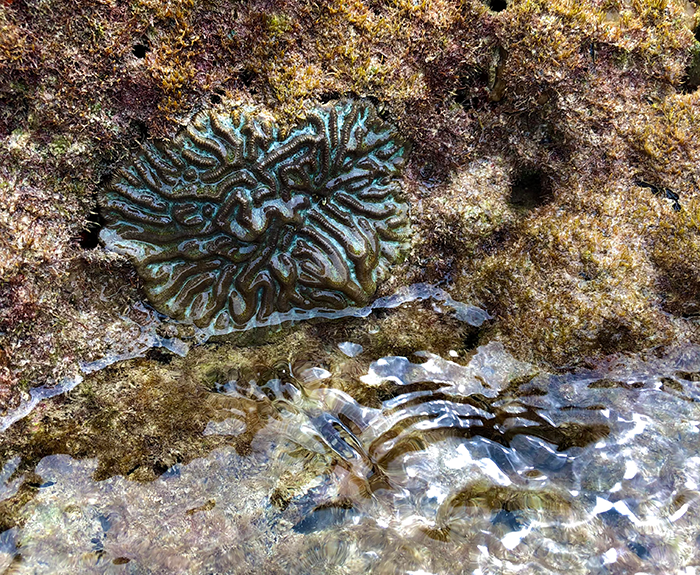
Symmetrical Brain Coral (Pseuododiploria strigosa) emersed during low tide along the shoreline of PortMiami.
For more than a decade, Coral Morphologic has sought to shine a spotlight on Miami’s intertidal urban corals and their potential scientific value. These surprisingly resilient corals appear to avoid bleaching and stem disease better than their conspecifics offshore on the natural reefs. Over the past two years we have been working with scientists at NOAA’s Atlantic Oceanographic Meteorological Laboratory (AOML) to explain these differences using molecular lab analysis of tissue samples collected in the field. That work finally culminated in ‘Molecular Mechanisms of Coral Persistence Within Highly Urbanized Locations in the Port of Miami, Florida‘ published in the research journal Frontiers in Marine Science.
We found that the Symmetrical Brain Corals (Pseuododiploria strigosa) living in the urban environment (specifically alongside MacArthur Causeway and Star Island in Miami) were predominantly colonized by the Durusdinium sp. strain of symbiotic algae (zooxanthellae) that provides the coral with photosynthetic energy during daylight hours. Durusdinium is known to be a heat-tolerant genus of zooxanthellae, and has long been investigated by scientists seeking to create bleaching-resistant ‘super corals’. However, until this study, the Symmetrical Brain Coral had rarely been observed hosting this species of zooxanthellae elsewhere in the region, making these observations here in Miami quite remarkable.
Beyond the helpful symbionts, the Symmetrical Brain Corals living in the urban environment were also found to be producing proteins and enzymes known to identify and digest pathogenic invaders. These proteins could be a two-fold benefit to the coral since disease-causing microbes can be digested as food before they can infect the coral. The urban marine environments around Miami often have high concentrations of phytoplankton and turbidity in the water, along with high bacterial concentrations that frequently require ‘no swim’ public health advisories. The ability to capture and extract more energy from food could enhance its health and provide sustenance during times of bleaching.
These findings from a single species of urban coral in Miami’s coastal environment suggest further investigation is warranted in the variety of other reef-building species that have self-recruited to the City’s concrete and riprap shorelines. It also demonstrates how the human-made hydrogeologic conditions around PortMiami serve as an evolutionary gauntlet selecting for corals better adapted for life in the Anthropocene.
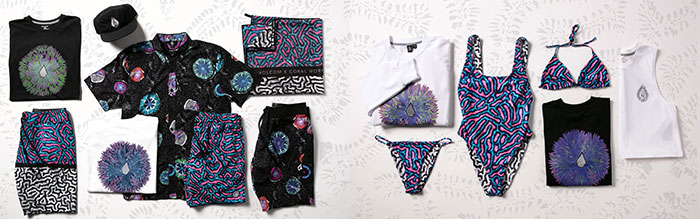
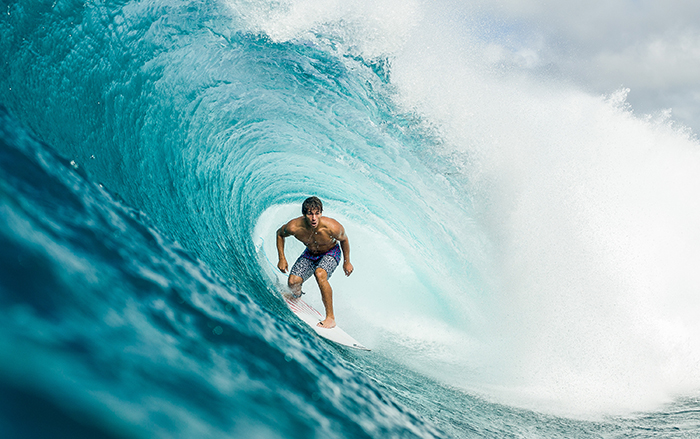
We are proud to unveil the Volcom x Coral Morphologic collection, a men’s / women’s clothing line featuring our flower anemone and brain coral photography blended with classic Volcom design. The collection explores the interface of land and sea, or surf zone, and is focused on surf and swimwear. With global coral reef habitats on the brink of ecological collapse, this collaboration was born out of a mutual desire to promote the restoration of coral reefs around the world.
The garments feature Eco True production, Volcom’s ongoing effort of turning sustainability commitments into actions with responsible manufacturing practices, better fiber sourcing, assessing impacts, and meaningful give backs. In addition to organic cotton and water-saving digital printing, the collection features Econyl®, a regenerated nylon yarn made from discarded fishing nets and other post consumer waste.
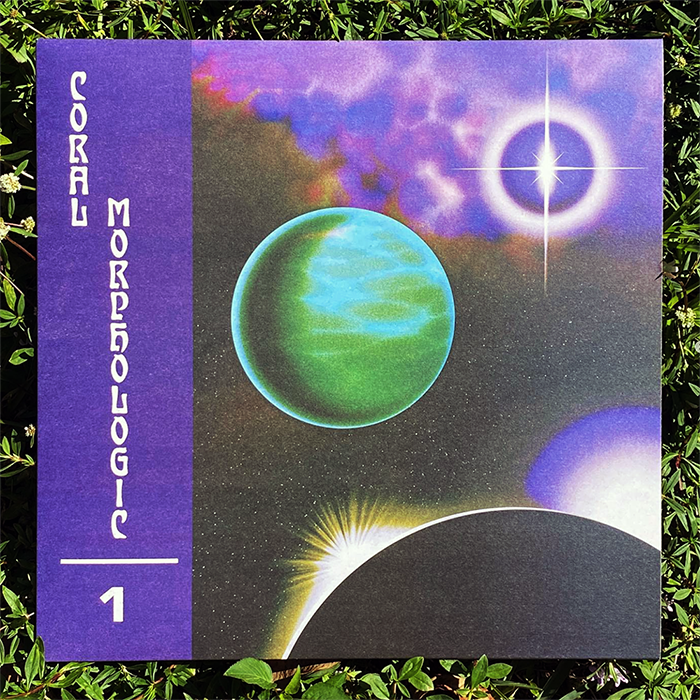
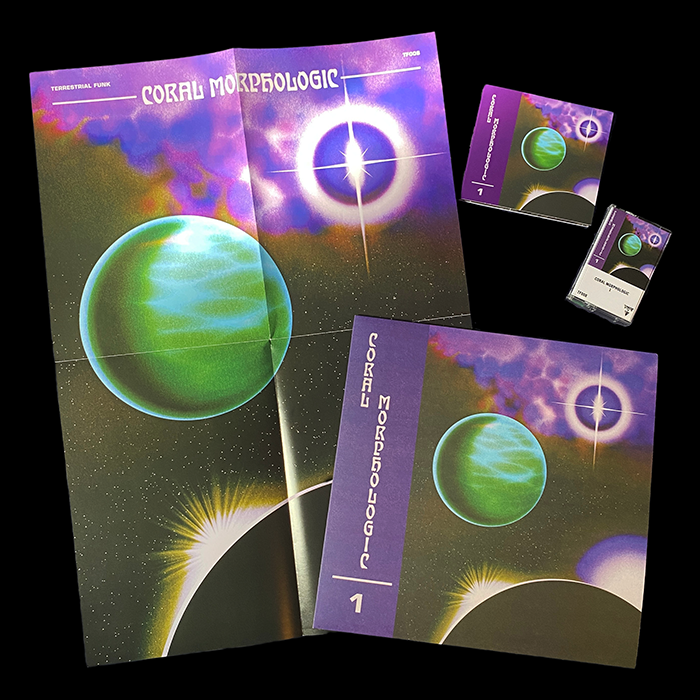
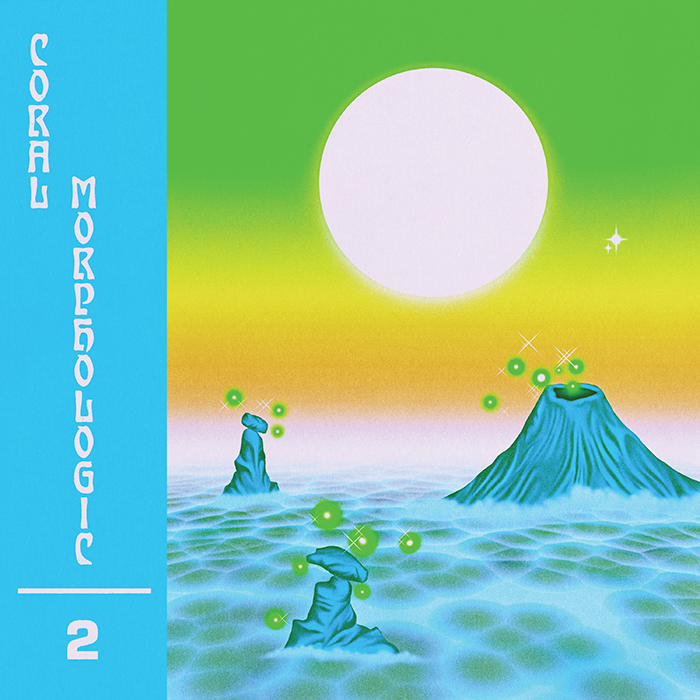
We are grateful to present Coral Morphologic 2, an album of nine records inspired by the corals’ cosmic ability to synchronize their lives to Earth’s daily rotation upon its axis, the Moon’s monthly trip around Earth, and Earth’s yearly orbit of the Sun. CM 2 was written, produced, and mixed by Coral Morphologic and mastered by Adam McDaniel at Drop of Sun Studios, Asheville NC. The album features artwork by Robert Beatty, and the ‘Poster Edition‘ of the album includes an 18″ x 24″ poster version of the album art, while the ‘Print Edition‘ includes a set of nine 5″ x 5″ Coral Morphologic photographs representing each track on the album. Stream CM 2via Spotify and pick up the album in digital and poster / print editions @ https://coralmorphologic.bandcamp.com/album/coral-morphologic-2
Update 10/2/20: Read an interview with the Miami New Times on CM 2.
We kicked off the launch with a party at Pérez Art Museum on the Miami waterfront. Romulo Del Castillo provided the Miami jams following a panel discussion led by National Geographic explorer Alizé Carrère featuring Colin, NOAA scientist Dr. Ian Enochs, and Miami Beach’s environment & sustainability director Elizabeth Wheaton.
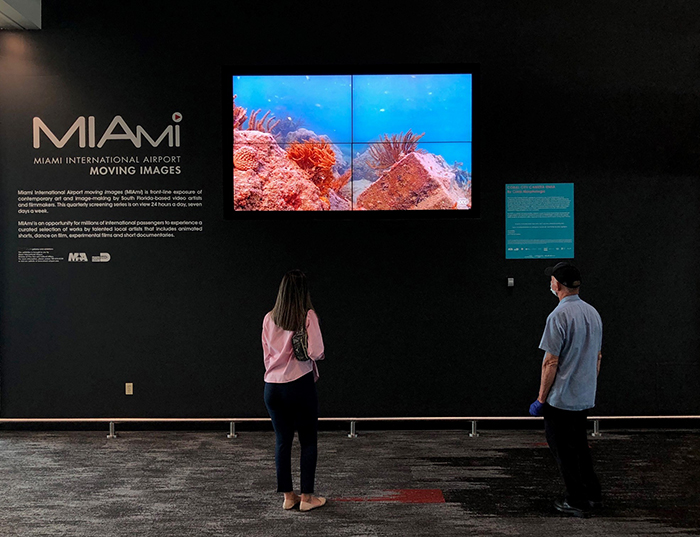
Update6/1/20: The CCC is now screening at the Miami International Airport as part of the Miami International Airport Moving Images (MIAmi) video installation series, located near gate J7:
Update 10/16/20: The CCC is now screening at the HistoryMiami Museum.
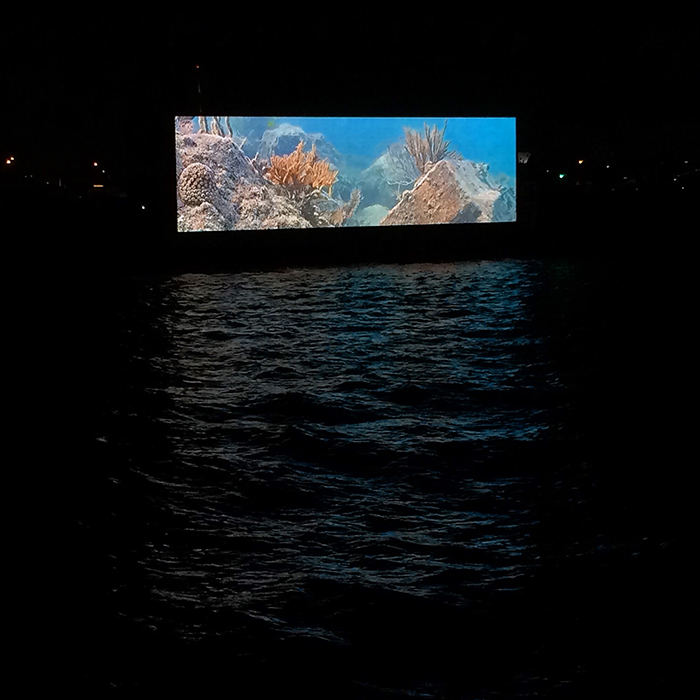
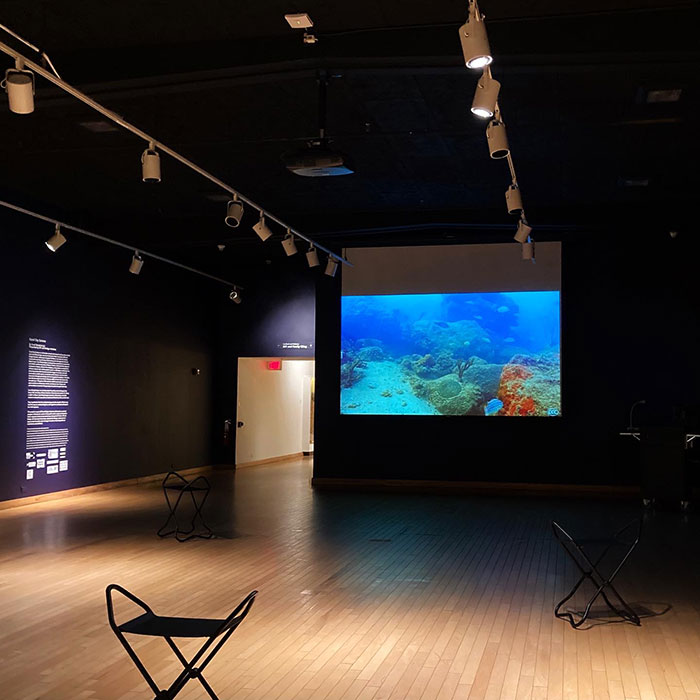
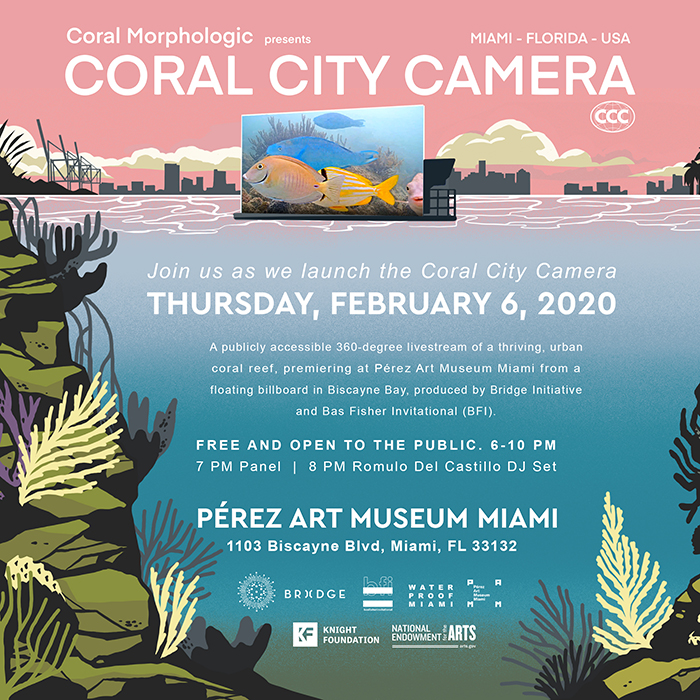
Join us Thursday, February 6th as we launch the Coral City Camera, our publicly accessible 360-degree livestream of a thriving, urban coral reef premiering at Pérez Art Museum Miami from a floating billboard in Biscayne Bay, produced by Bridge Initiative & Bas Fisher Invitational. Admission is free and open to the public as part of PAMM’s First Free Thursdays series.
In conjunction with the floating livestream, National Geographic Explorer Alizé Carrère will moderate a panel discussion featuring NOAA scientist Dr. Ian Enochs, Coral Morphologic’s Colin Foord, and Miami Beach’s environment & sustainability director Elizabeth Wheaton. The night continues on the terrace with a DJ set by Romulo Del Castillo. See you there, Miami!
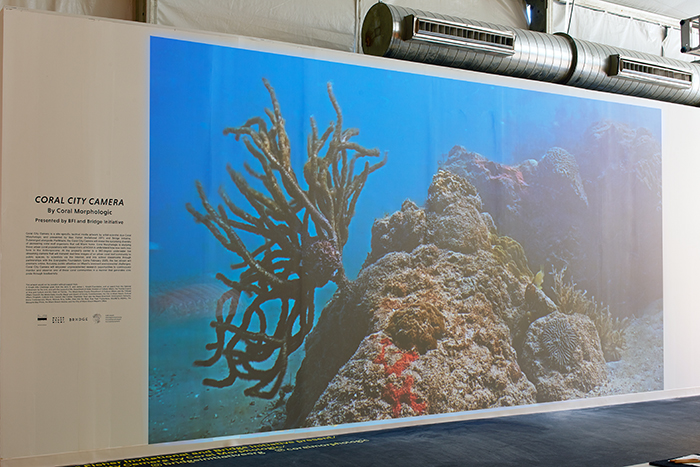
For Design Miami 2019/, we debuted a preview of the Coral City Camera, a 360° live stream underwater camera located at our collaborative research site with NOAA’s AOML Coral Program. The CCC aims to supplement our urban coral research with real-time scientific data and offer a source of natural wonderment to the public, with the live stream officially going live in February 2020.
Over the past several years we’ve been working toward the installation of an underwater camera in Biscayne Bay as a component of our research into Miami’s coral ecosystems. Recently, with the support of Bas Fisher Invitational & Bridge Initiative under National Endowment for the Arts & Knight Foundation grants, we installed a 360° live stream underwater camera at our collaborative research site with NOAA’s AOML Coral Program. In addition to providing valuable scientific data, the live stream will be available free to the public as an educational tool and source of wonderment. The Coral City Camera live stream will be officially available to watch in February, with a preview at Design Miami/ December 3-8. Check out the video above to see how the camera was installed with View Into the Blue.
We are happy to report the new adidas flagship store in London features a Coral Morphologic video installation. Follow this link for the adidas_LDN location on Oxford Street and watch a tour of the store here.
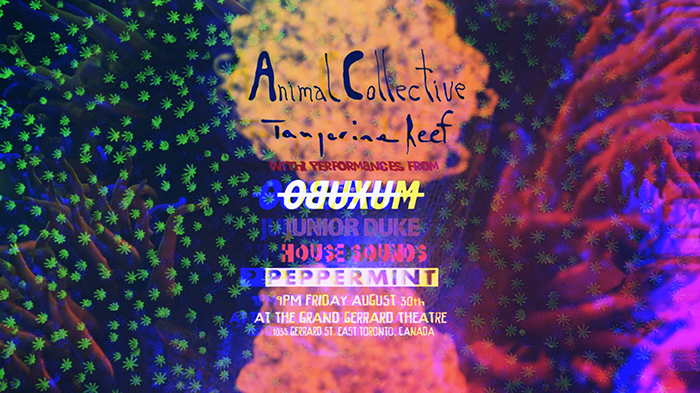
Tangerine Reef, our audiovisual collaboration with Animal Collective, will have its first official screening in Canada on Friday, August 30th at the historic Grand Gerrard Theater in Toronto. Tickets are available here.
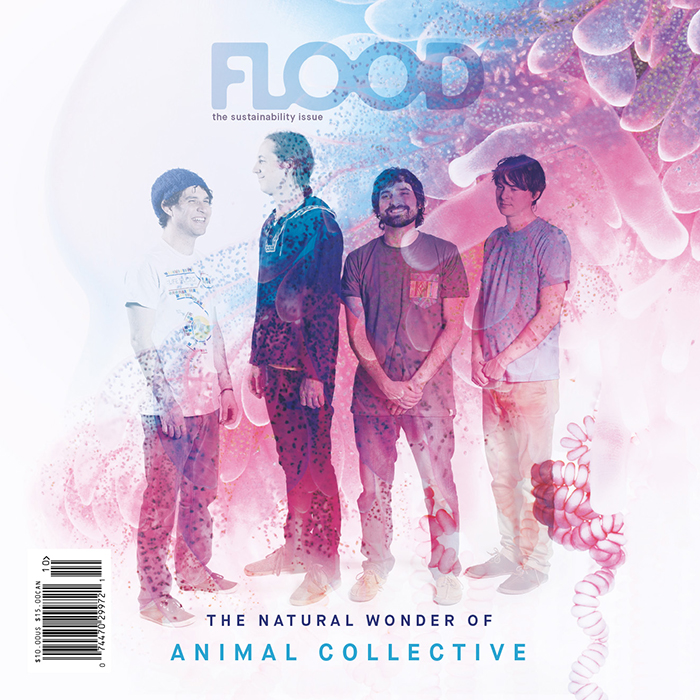
Pick up the 10th issue of FLOOD Magazine featuring a cover story on Animal Collective wherein they detail their history and our collaboration Tangerine Reef. Read the article here.
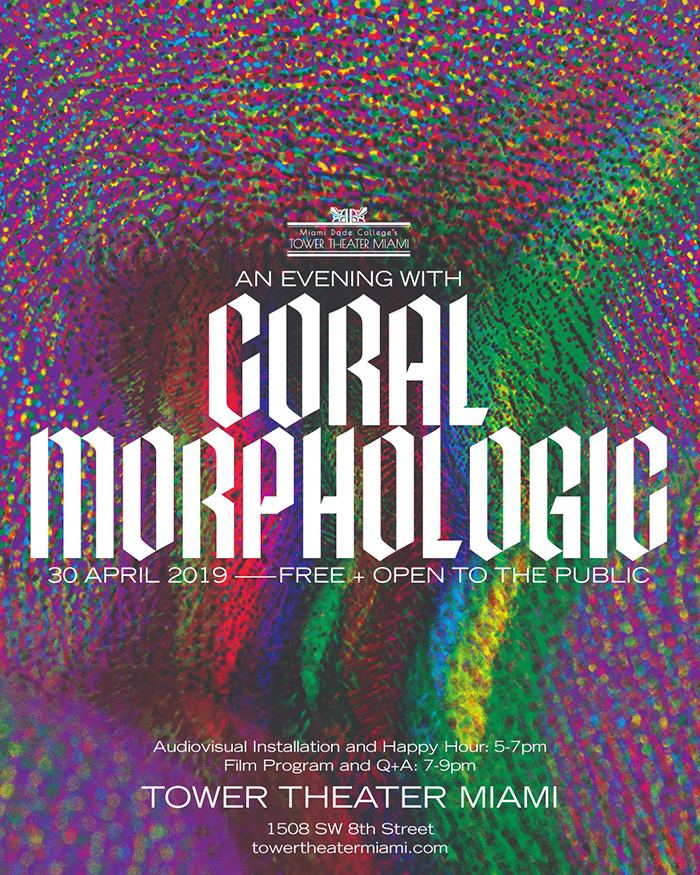
We are thrilled to share we’ll be curating ‘An Evening with Coral Morphologic‘ at the historic Tower Theater Miami on April 30th. In addition to inaugurating Tower’s new lobby projection system with a CM audiovisual installation, we’ll be showing a film program in the theater consisting of Miami’s first official Tangerine Reef screening, John McSwain’s CM documentary Coral City, and a Q & A session with CM, McSwain, and Brian Weitz of Animal Collective moderated by Miami-based writer and photographer Monica Uszerowicz.
The event is free and open to the public but we kindly ask patrons to RSVP at this link. The audiovisual installation/ happy hour runs 5-7pm, and the film program/ Q & A runs 7-9pm. We will have a version of the poster above for sale at the event, designed by Rob Carmichael of SEEN Studio.
Update 5/1/19: Our audiovisual installation in the theater’s lobby will run till early December – if you are in the area feel free to stop in and check it out.
We’re psyched to share a soundtrack of ours (‘Oolite’) is included on the second Space Tapes compilation. The album features artists based in or from Florida. Stream Space Tapes, Vol. 2 via Spotify and pick up the album in digital and vinyl editions @ https://spacetapesmia.bandcamp.com/album/space-tapes-vol-2-st009
Colin will join Animal Collective at CPH:DOX 2019 in Copenhagen, Denmark on Friday, March 22nd for a screening of Tangerine Reef followed by Q & A, plus live sets from AC’s Geologist and Deakin featuring visuals from us at Aveny-T. See this link for tickets.
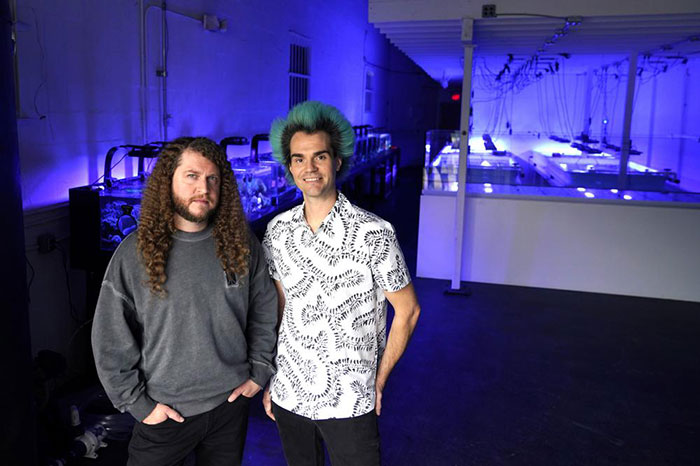
Coral Morphologic was recently commissioned to build a high-tech indoor coral microfragmentation and wet lab by the Alligator Head Foundation in Portland, Jamaica. Additionally, a 300 gallon reef biotope was built to serve as an educational display. Over the course of three trips, the Coral Morphologic team coordinated purchasing, exporting, and constructing the AHF Marine Lab where it now serves both the local marine scientists working to protect the Alligator Head Marine Sanctuary, as well as international scientists that can visit and conduct their work with state-of-the-art equipment in a controlled laboratory setting.
On November 27th we embarked on the first field trip with researchers from NOAA and University of Miami for the next phase of Coral Morphologic’s long-term project to document, study, and conserve Miami’s unusually resilient ‘urban corals’. That is, the corals that have pioneered into Miami’s intercoastal waterways as larvae and settled onto man-made infrastructure. It is precisely Miami’s legacy of anthropogenic disturbance that led Coral Morphologic to recognize that the City was a real-world window in which to understand how corals may adapt and evolve to anthropogenic impacts.
Studying genetic variation and the underlying causes of these variations is at the heart of a global effort to identify more resilient coral genotypes capable of restoring degraded coral habitat. Most of this research has focused on traditionally healthy, offshore reef habitats and identifying corals that show more resilience to stress than neighbors, or in experimental lab settings with distinct coral colonies of the same species subjected to stressful conditions. However, our project proposes to sample the tissue of healthy coral colonies (specifically Pseudodiploria strigosa and Porites asteroides) living in less than ideal ‘urban’ conditions, as well as healthy coral living offshore in ‘natural’ conditions, to determine if the genetic variation between sites is significant. The sample sites will also be surveyed and scientifically described by community assessment and seasonal changes through photo mosaics, monitoring of water chemistry, temperature, pH, and light levels, to quantify and compare site conditions. The final phase of this project will involve transplanting corals to the tip of PortMiami from each of the ‘urban’ sites, along with fragments from the offshore, natural reef to compare how each is able to adapt, and eventually developing an ‘urban coral’ nursery to grow the most resilient coral genotypes for restoration of reefs and laboratory research.
But the first task in this year-long study was to characterize each of the study sites through photo-mosaics that create three dimensional maps using a pair of GoPro cameras. These maps will serve as our detailed baseline imagery to better understand the forces of coral recruitment, growth, mortality, competition from macroalgae, and the accumulation of trash/ debris over time. Watch the video above to see each of the three urban coral research sites and the techniques used to document them. We look forward to providing updates over the course of the year as we document the sites, analyze transcriptomes, transplant corals, and characterize range of water quality and chemical conditions that Miami’s urban corals endure.
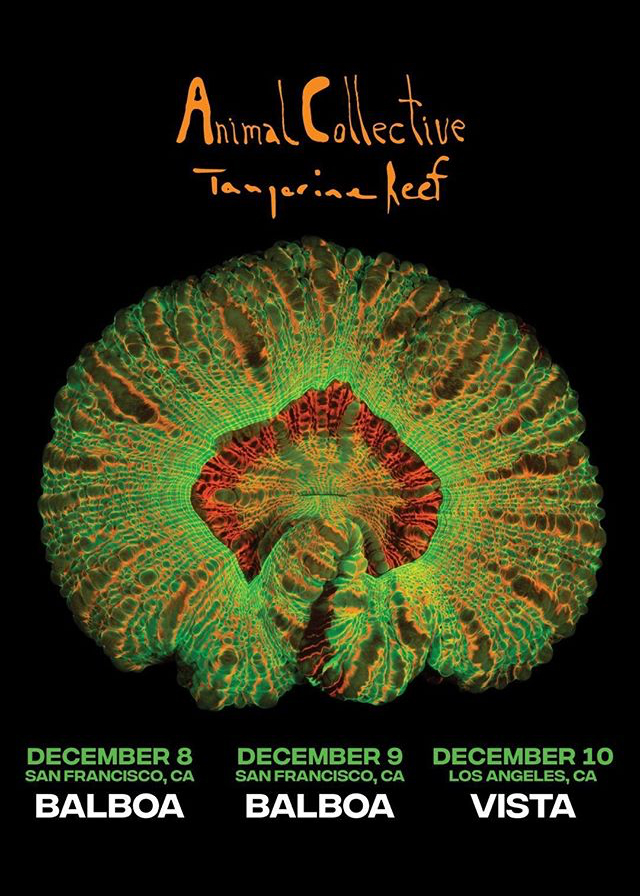
Following their November 9th performance at Baltimore’s Parkway theater, Animal Collective will embark on a 3-date West Coast tour this December in support of our collaborative audiovisual album Tangerine Reef at two historic movie theaters in California – the Balboa in San Francisco on the 8th & 9th, and the Vista in Los Angeles on the 10th. Tickets are available via links above or in person at the theaters.
Tangerine Reef, our audiovisual collaboration with Animal Collective, is officially live! Watch the full film via AC’s website or direct via YouTube / Vimeo.