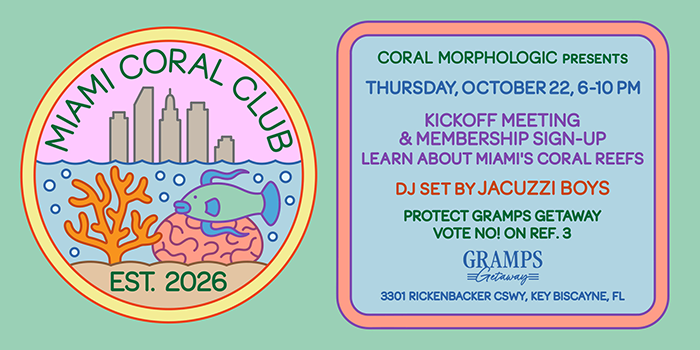
This October marks Coral Morphologic’s 19th year, and we are excited to launch the Miami Coral Club, a new coral-focused monthly event series at Gramps Getaway on Virginia Key. Join us on Thursday, October 22nd, from 6-10 PM for our kickoff meeting, where you can sign up for membership and learn more about Miami’s coral reefs.
Enjoy Coral Morphologic and Coral City Camera visual activations throughout the space, DJ sets from Miami’s own Jacuzzi Boys, and an extended happy hour all night long. Premier membership swag bags and pre-orders for the Coral City Camera 2027 calendar will be available on a first-come, first-served basis.
Come out for a fun, educational meet and greet with Miami’s Coralheads!
‘Miami Coral Club’ patch and flyer art by Gabriel Alcala.
On this World Oceans Day we are proud to unveil the latest extension of the world’s longest underwater timelapse, starting May 1, 2023, and running for three years through May 1, 2026. This period covers summer 2023’s unprecedented coral bleaching mortality event, and indeed multiple corals can be seen bleaching, but then recovering and growing through 2024 and 2025 into 2026.
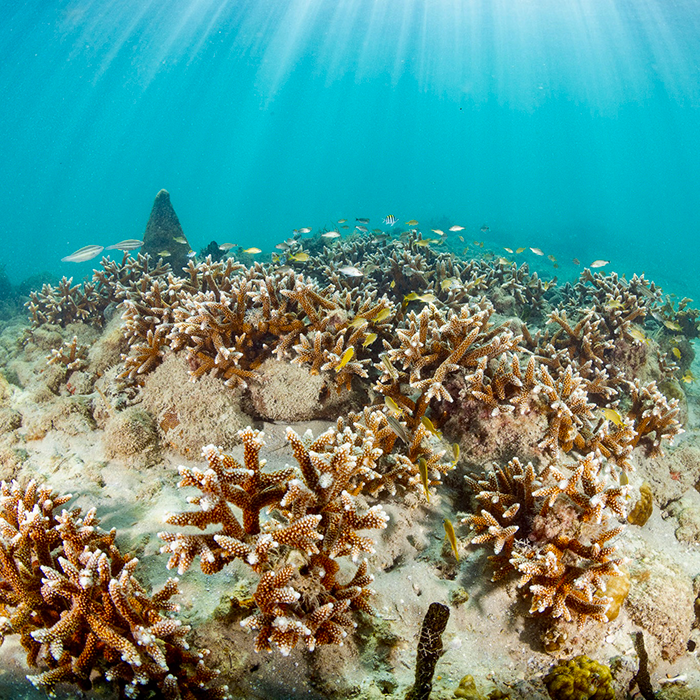
Of greatest interest to us is the success and proliferation of the urban strain of staghorn coral native to PortMiami (Acropora cervicornis aka ACER ‘Ventura’). Not only has it not bleached yet, but it has also proliferated extremely fast. In just four years, a single branch of ACER ‘Ventura’ has increased thousands of times in biomass, to the point that we now have one of the densest thickets of this endangered coral in the State of Florida (in the Intercoastal Waterway no less)!
Over the past year, these corals have endured significant temperature extremes. With our new Aqualink buoy, we recorded late summer temps reaching 90F (32.6C) and 2026 winter lows of 60F (15.5C). This represents a huge range of thermal tolerance for this strain of critically important reefbuilding coral, and a reminder that corals grown for nearshore reef restoration in Florida need cold-stress adaptation as well as heat-stress.
Working with our partners at NOAA AOML and University of Miami’s Rescue a Reef, we continue our scientific investigation into the mechanisms of the strain’s resilience, and continue to amplify it for the purpose of restoring Miami’s nearshore reefs.
Of particular interest is observing how dynamic the sediment is at the site. PortMiami is subject to intense currents, magnified by passing ships displacing huge volumes of water. Despite these unnatural conditions, the corals and fish have adapted well to this anthropogenic environment.
Our ability to timelapse the growth of PortMiami’s urban corals highlights the scientific value of the Coral City Camera and its ability to document what was previously undocumented. After 6 years of near-continuous recording and cataloging 220 fish species, no underwater coral reef site anywhere in the world has been as thoroughly recorded and archived.
If you’d like to make a tax-deductible donation to support the Coral City Camera and our ongoing work studying and protecting Miami’s urban corals you can do so here via our fund at the Key Biscayne Community Foundation @ https://www.kbcf.org/programs/coral-city-foundation/
We are happy to announce the publication of a new research paper by University of Miami coral scientist Dr. Allyson DeMerlis in collaboration with Coral Morphologic. This paper studied the genetic changes staghorn corals (Acropora cervicornis aka ACER) underwent when transplanted from an offshore nursery to the inshore urban habitat at the Coral City Camera in PortMiami. Typically, staghorn corals are grown for restoration in offshore hanging ‘tree nurseries’ under stable, ideal water conditions. However, the reefs most in need of restoration are typically inshore of these nurseries and/or have suffered coral mortality due to deteriorating water quality. Understanding how endangered staghorn corals adapt to less-than-ideal conditions is the first step towards selecting strains that can survive long-term and restore Florida’s reefs. The paper, titled ‘Transcriptomic response of Acropora cervicornis following transplantation to a marginal, nearshore environment’ was published in the research journal Frontiers in Marine Science.
The Coral City Camera site at PortMiami offers an ideal location to study and monitor experimental coral transplants from offshore. By transplanting nursery-grown Acropora cervicornis into the highly urbanized, marginal habitat of the Port of Miami, Dermerlis’ research explores the frontier of urban coral resilience. Four months after outplanting, these staghorn corals demonstrated an impressive 92% survivorship. Despite facing greater thermal extremes and the dynamic stressors of a man-made waterway, the corals successfully persisted. This proves that the city’s coastal edges can serve as a vital real world laboratory for testing the acclimatization capacity of reef-building corals.
The secret to the staghorns’ survival appears to lie deep within their molecular biology. The transcriptomic data reveals that these urban outplants underwent a massive genetic shift, significantly upregulating 961 host and symbiont genes compared to their offshore nursery counterparts. The corals achieved this by maintaining a sustained activation of environmental stress response and innate immunity pathways, actively synthesizing heat shock proteins, managing unfolded proteins, and boosting cellular defense mechanisms. This persistent genetic plasticity suggests that they are actively acclimatizing to their novel environment. Ultimately, this research underscores that the future of marine conservation depends on leveraging this molecular flexibility, guiding us to select the most rugged, stress-tolerant genotypes to populate the resilient coral cities of tomorrow. We look forward to supporting further research and collaboration with Dr. Demerlis and the University of Miami’s Rescue a Reef restoration program to help rebuild Miami’s nearshore reef communities.
We are proud to reveal a 1,000 day coral bleaching and recovery timelapse, starting May 1st 2023 and running through January 28, 2026. This period covers summer 2023’s unprecedented coral bleaching mortality event, and indeed multiple corals can be seen bleaching, but then recovering and growing through 2024 and 2025 into 2026.
Watch 30fps and 60fps versions of the above 10fps timelapse here and here.
Of greatest interest to us is the success and proliferation of the urban strain of staghorn coral native to PortMiami (Acropora cervicornis aka ACER ‘Ventura’). Not only did it not bleach, but has grown swiftly. In just four years, a single branch of ACER ‘Ventura’ has increased thousands of times in biomass, to the point that we now have one of the densest thickets of this endangered coral in the State of Florida!
Just in the past six months, these corals have endured significant extremes in temperature. With our new Aqualink buoy, we recorded late summer temps reaching 90F (32.6C) and recent 2026 winter lows of 60F (15.5C). This represents a huge range of thermal tolerance for this strain of critically important reefbuilding coral, and a reminder that corals grown for nearshore reef restoration in Florida need cold-stress adaptation as well as heat-stress.
Working with our partners at NOAA AOML and University of Miami’s Rescue a Reef, we continue our scientific investigation into the mechanisms of the strain’s resilience, and continue to amplify it for the purpose of restoring Miami’s nearshore reefs.
Of particular interest is observing how dynamic the sediment is at the site. PortMiami is subject to intense currents, magnified by passing ships displacing huge volumes of water. Despite these unnatural conditions, the corals and fish have adapted well to this anthropogenic environment.
Our ability to timelapse the growth of PortMiami’s urban corals highlights the scientific value of the Coral City Camera and its ability to document what was previously undocumented. After 6 years of near-continuous recording, and nearly 220 species of fish cataloged, there is no underwater coral reef site anywhere in the world that has been as thoroughly recorded and archived!
Read more on the 1,000 day timelapse from BBC Wildlife Magazine here and Dive Magazine here.
If you’d like to make a tax-deductible donation to support the Coral City Camera you can do so here via our fund at the Key Biscayne Community Foundation @ https://www.kbcf.org/programs/coral-city-foundation/
At long last we are happy to announce the publication of a research paper documenting the uncomfortable relationship of a male yellowtail parrotfish (Sparisoma rubripinne) with a juvenile sharksucker remora (Echeneis naucrates). The paper, titled ‘Underwater video reveals novel behavioural interactions: a case study of a repeated ongoing association between a sharksucker Echeneis naucrates and a yellowtail parrotfish Sparisoma rubripinne,’ has been published in the research journal Marine Biological Association of the United Kingdom by Cambridge University Press.
The Coral City Camera was instrumental in documenting this relationship and allowed observations to be made that would otherwise have been extremely difficult for a researcher underwater. Remoras are typically associated with large marine fish, mammals, and sea turtles upon which they hitch a ride and benefit from eating its hosts’ leftover food scraps and gaining protection. However, on a smaller fish like a yellowtail parrotfish, it appears that this relationship is less mutualistic and more parasitic. The paper documents the long-term multi-month association with a single male yellowtail parrotfish (we dubbed ‘Ramón’) with a juvenile remora. It is likely the longest documented association of a remora on a single parrotfish. From observations on the CCC, it appeared that Ramón struggled with its remora based on its behavior of scratching itself against the sand and substrate in apparent efforts to dislodge it, and suffering visible scrapes and scratches in the process. We also observed that when Ramón attempted to rest, it appeared annoyed with its wiggling guest and unable to sleep properly.
Over the 5-year course of the Coral City Camera we have observed remoras on multiple smaller fish species, including a wide variety of parrotfish. But yellowtail parrotfish seem to be the most common hosts, and appear to host them for longer periods of time than other fish species.
This month marks 5 years of the Coral City Camera, our ongoing live stream of Miami’s underwater world! To celebrate this milestone, have a listen to an NPR All Things Considered segment with Colin.
Thank You to everyone who has watched, chatted, and shown support over the years!
Our soundtrack ‘Anthozoa’ off the just-released Topo Chico x Terrestrial Funk Sabores Sounds EP is now available to stream and download on all platforms. Have a listen:
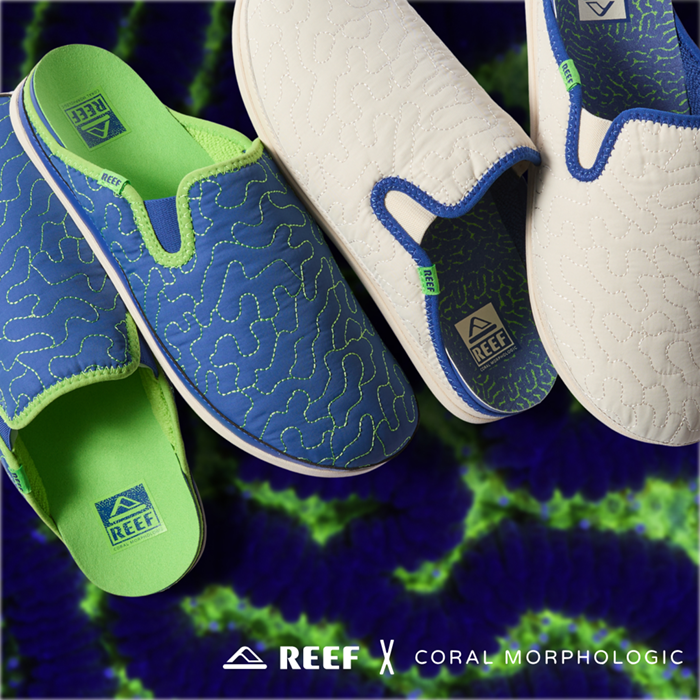
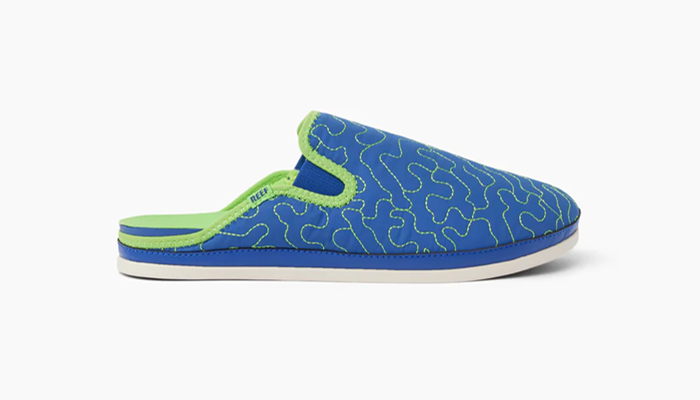
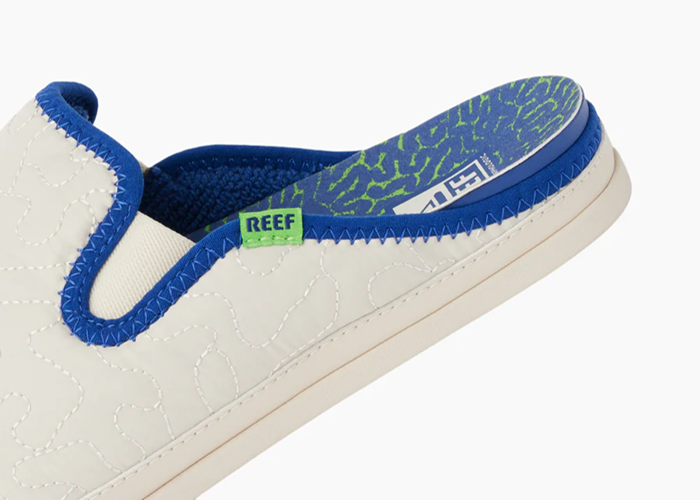
We are proud to release the limited edition Reef x Coral Morphologic Homeys, a Coral Morph-inspired cushioned slipper that celebrates the warmth and color of the coral reef during the winter months, when ocean time is limited.
Available in blue / neon green in men’s and tan / white in unisex, every sale benefits the Coral City Foundation’s efforts to upkeep the Coral City Camera and support ongoing CCF restoration projects. A perfect slipper to kick back and tune in to the CCC, the Coral Morph Homeys redefine the concept of the home shoe while making a meaningful impact. Read more about the collaboration here.
A new scientific paper has been published in the research journal Frontiers in Remote Sensing titled ‘Automatic detection of unidentified fish sounds: a comparison of traditional deep learning with machine learning’ authored by Xavier Mouy et al, which analyzed week-long hydrophone recordings of the Coral City Camera site at PortMiami in order to detect fish sounds.
The researchers found that using a Convolutional Neural Network (CNN) enabled detection of fish sounds that both human analysts and traditional spectrogram data analysis otherwise could not detect. The CNN was trained using hydrophone recordings made in British Columbia, but proved accurate in the novel environment at PortMiami, even despite significant background noises from boats. The software developed for this study is open-source and available to other researchers.
Stay tuned in the coming months as we prepare to connect a hydrophone to the Coral City Camera and provide an audio channel to the YouTube livestream. If possible, we aim to incorporate real-time analysis of the underwater sounds to help monitor and track fish activity.
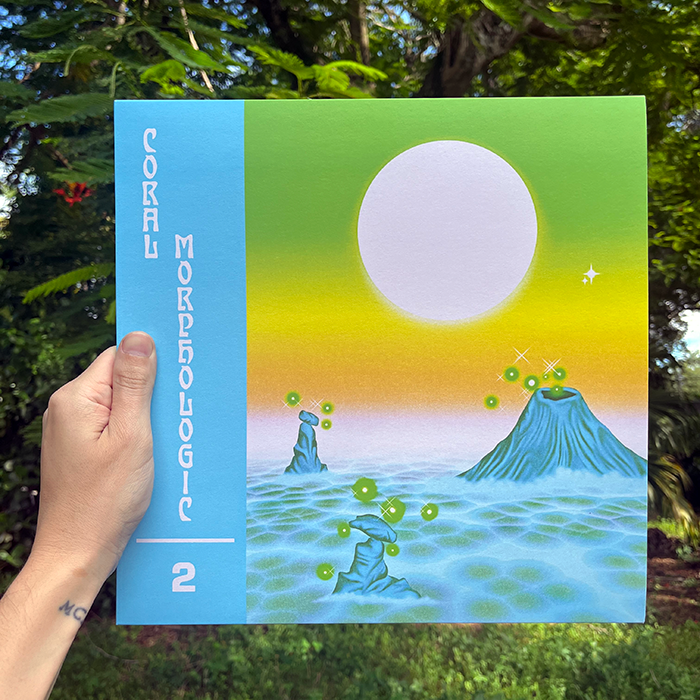
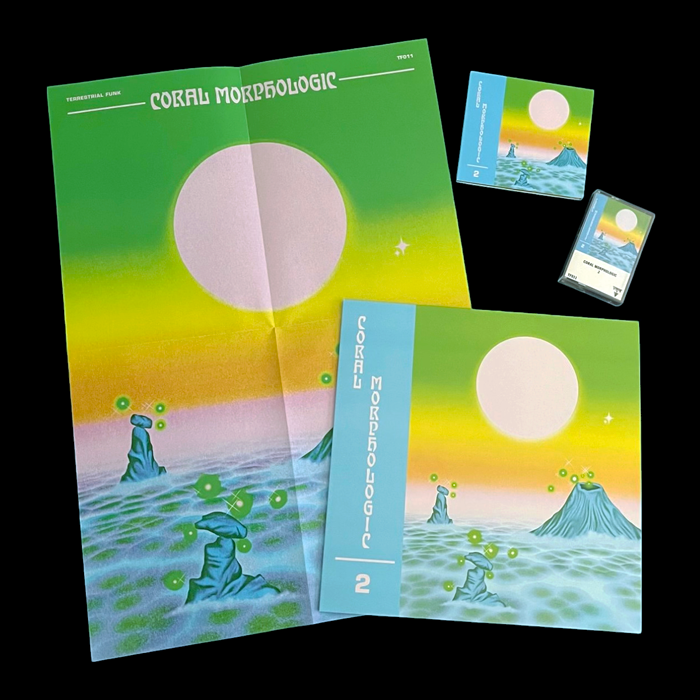
We are proud to announce the forthcoming physical release of our album Coral Morphologic 2 via Miami’s best, Terrestrial Funk. To celebrate, have a listen to ‘Meridiem Suite’, a 3-song section from the album.
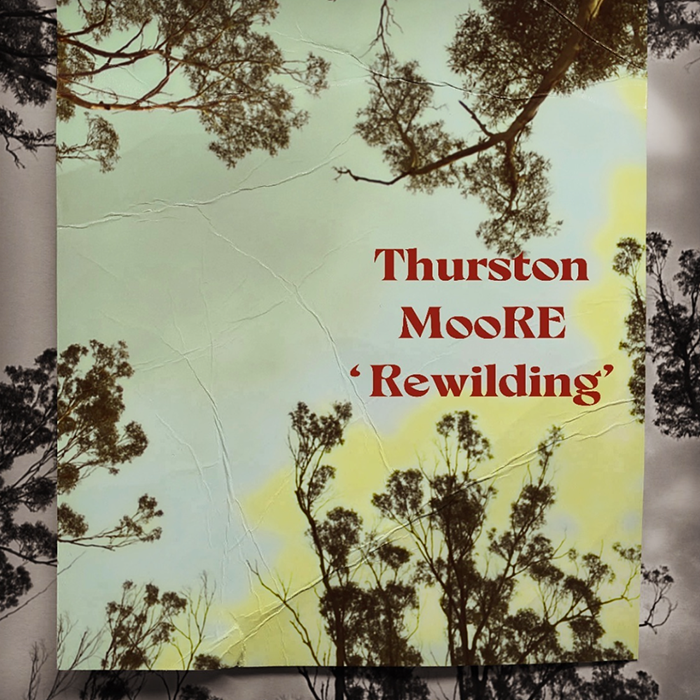
We are “Coral Morphologically dreaming” with ‘Rewilding,’ a new song from legendary musician Thurston Moore. Listen to ‘Rewilding’ below and stay tuned for Moore’s new album Flow Critical Lucidity, out via Daydream Library Series.
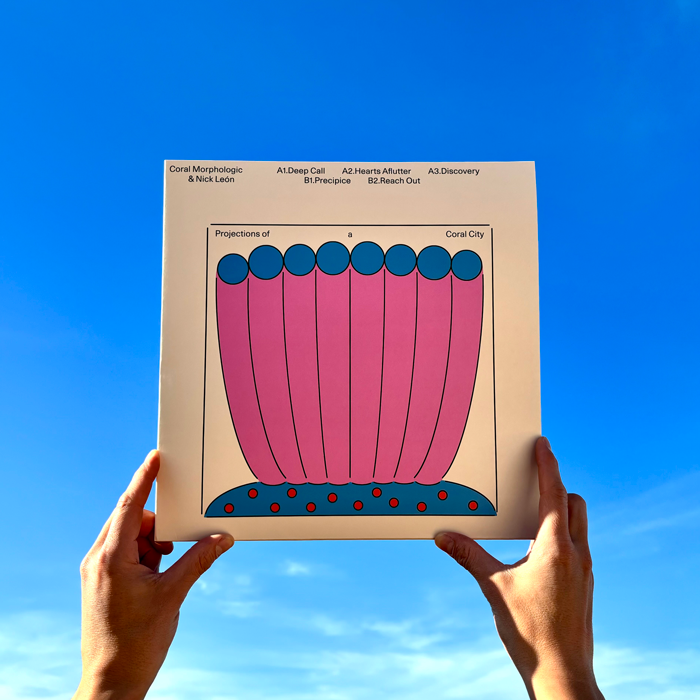
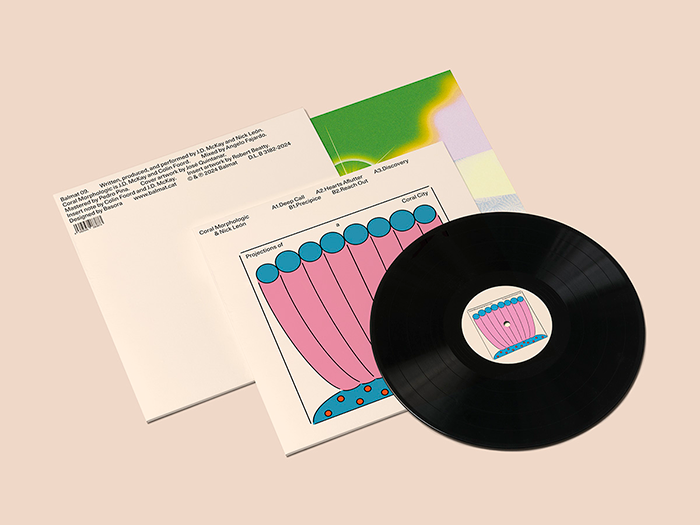
We are psyched to share the release of new music with our friend and citymate Nick León. Projections of a Coral City is available on vinyl LP and digipack CD via Balmat.
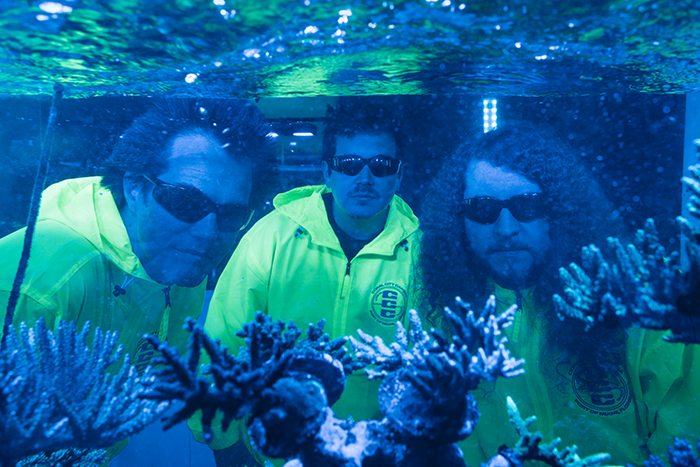
Colin, Nick, and J.D. in the Coral Morphologic lab. Photo by Karli Evans.
Written, produced, and performed by J.D. McKay and Nick León ~ Coral Morphologic is J.D. McKay and Colin Foord ~ Mixed by Angelo Fajardo ~ Mastered by Pedro Pina ~ Cover artwork by José Quintanar ~ Insert artwork by Robert Beatty ~ Insert note by Colin Foord and J.D. McKay ~ Designed by Basora ~ Full credits here.
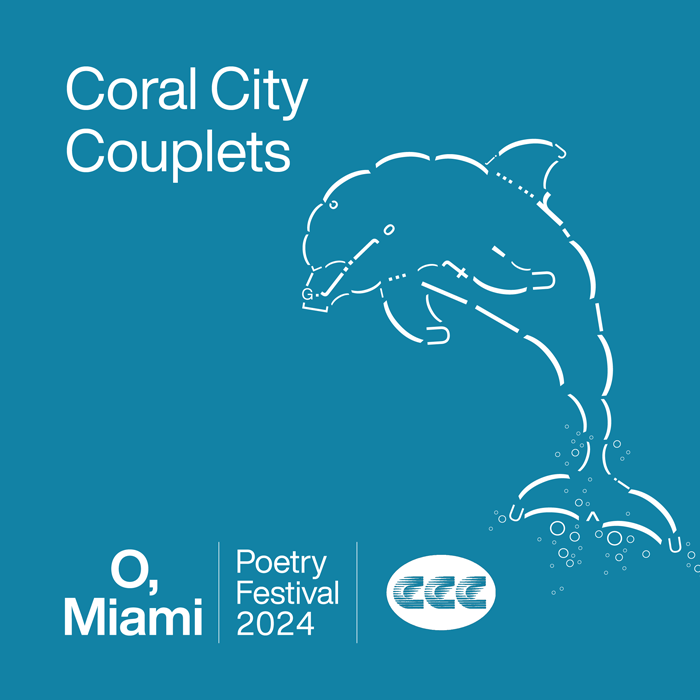
We are thrilled to team with O, Miami Poetry Festival for a month-long program of aquatic poetry with Coral City Couplets. This month (April, National Poetry Month), students across Miami-Dade County will tune in to watch underwater live streams from the Coral City Camera, then write original poems inspired by our unique subtropical marine life. Special Thanks to Miami educators Monica Asencio and Katie Ortiz, creators of the Coral City Couplets curriculum. Read the month’s poems via our Instagram or YouTube accounts.
The summer of 2023 will go down as the hottest in recorded history (thus far). Sadly, hot ocean water means coral bleaching, and Florida’s corals suffered tremendously this year. Fortunately the Coral City Camera was in position to create the world’s most comprehensive in-situ coral bleaching timelapses ever documented by human technology. Many attempts have been made to record a coral bleaching event, but to our knowledge, this is the most complete and longest running coral time lapse made underwater in a coral reef environment. The time lapse begins on May 1st, 2023 and you can see that the staghorn corals start growing and branching quickly. However, by mid-July water temperatures have reached the critical bleaching threshold of 87 degrees Fahrenheit (30.5C) and quickly turn white. The transplanted staghorns and elkhorn corals not only bleached, but they subsequently died. You can see how after turning white, they turn gray-brown as they are colonized by turf algae in August and September, and then they erode almost as quickly as they grew, expedited by the abundant parrotfish that graze this algae from the corals’ limestone skeletons.
Bleaching occurs when the metabolism of the golden-brown symbiotic algae that live in the coral tissue known as zooxanthellae goes into thermal overdrive. The algae’s production of photosynthetically-produced oxygen exceeds the limit the coral can safely handle inside its tissues, resulting in expulsion of the zooxanthellae (and its brown color) from its host. Because zooxanthellae normally provide a coral with photosynthetically-produced sugars, it begins to starve without these symbionts. Fast-growing corals like the endangered staghorn (Acropora cervicornis) and elkhorn (Acropora palmata) lack the energy stores that fleshier corals like brain corals have, and die from bleaching stress much more easily.
By the end of August 2023, all of the staghorn and elkhorn corals experimentally-transplanted by the University of Miami’s Rescue a Reef program succumbed to the excess heat and bleaching. These were corals that are native to cooler, cleaner waters offshore Miami, so it didn’t come as a complete surprise that they could not survive the urban reef environment around the CCC. However, a single strain of staghorn and elkhorn coral that are native to the Port did not bleach and continued growing happily despite water temps exceeding 90 degrees Fahrenheit (+32C). Not taking any chances, we brought fragments of these urban strains of stag and elkhorn coral into climate-controlled conditions at NOAA’s Atlantic Oceanographic Marine Lab in July. Once water temperatures cooled enough, these fragments were safely returned to the CURES (Coral Urban Research Experimental Site) nursery frame that sits about 20’ from the CCC.
Many corals like the mustard hill coral (Porites asteroides) did not fully recover from bleaching until December 2023. Most of the brain corals had recovered from bleaching by November 2023.
Amazingly, a significant number of corals native to PortMiami did not bleach, suggesting that they have a combination of genes and microbiomes that have enabled them to adapt to the Anthropogenic conditions along Miami’s urban coastline. The native urban corals that did bleach managed to survive for several months without any zooxanthellae to provide them with energy, before recovering new zooxanthellae in autumn when cooler water returned. It is possible that the higher levels of nutrients and plankton in the water helped provide these corals with additional energy captured as food.
These urban corals and the bleaching timelapses highlight the scientific value of the Coral City Camera and its ability to document what was previously undocumented. After 4 years of near-continuous recording, and more than 205 species of fish cataloged, there is no underwater coral reef site anywhere in the world that has been as thoroughly recorded and archived.
While corals throughout Florida and the Keys suffered tremendously in the summer of 2023, the stressful event also demonstrated that not all corals shared the same fates. Even within the same species, some corals did not bleach, bleached and recovered, or bleached and died. Studying the resilient strains of urban corals at PortMiami may illuminate how they’ve been able to adapt to marginal conditions and excessive heat. With global fossil fuel emissions continuing to rise unsustainably, we can expect even hotter summers in the years to come. Will corals be able to adapt naturally fast enough? Will scientists be able to accelerate the evolution of these corals to withstand hotter water temperatures? We are in an existential race against time, but we believe (now more than ever) that Miami’s urban corals will play an important role in finding out what makes a resilient coral ‘super’. The newly launched Coral City Foundation aims to build a land-based coral lab in 2024 to unlock these secrets and amplify their numbers.
We are thrilled share we’ve contributed coral fluorescence cinematography to the ‘Out of the Ashes’ episode of Netflix’s nature documentary Life on Our Planet, produced by Steven Spielberg and narrated by Morgan Freeman. Life on Our Planetpremieres Wednesday, October 25 on Netflix.
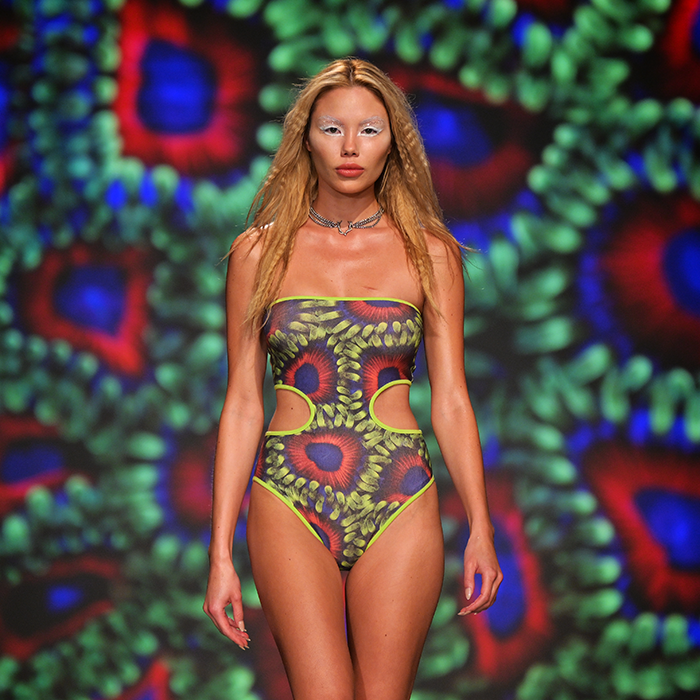
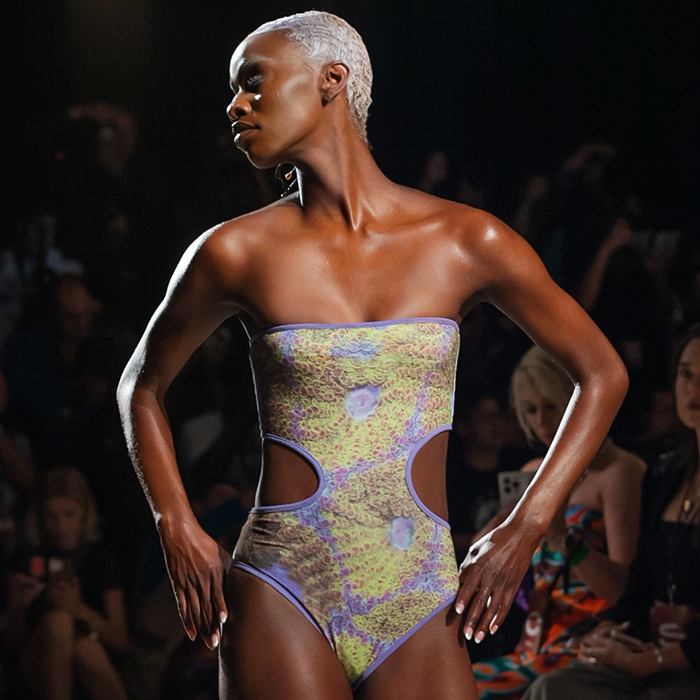
The ‘Flower Animal’ One Piece Swimsuit, featuring a Zoanthus sp. soft coral.
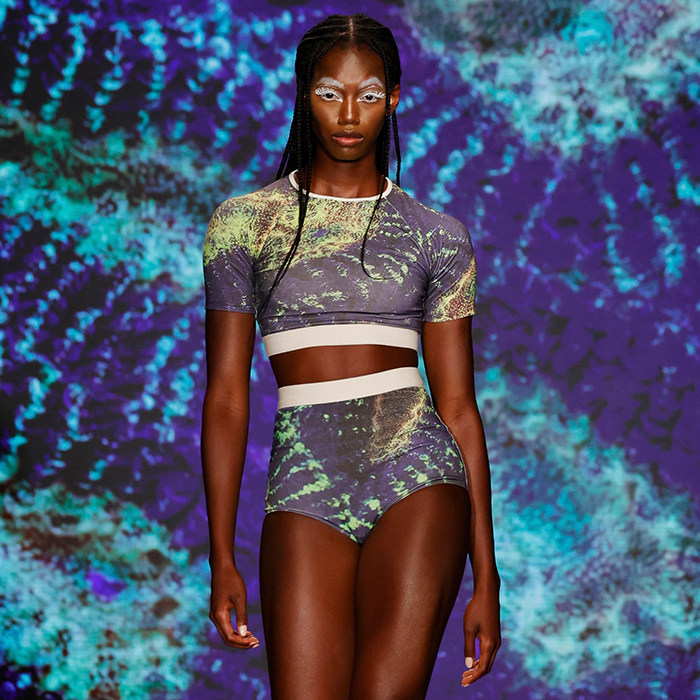
The three coral prints featured in the collection are original photos taken in the Coral Morphologic studio / lab. The entirety of the Coral City collection is made with certified organic hemp, cotton, and natural fibers.
Each item purchased will plant one coral on the reef in Bali with the non-profit organization Ocean Gardener.
The ‘Coral Dream’ One Piece Swimsuit, featuring a Dipsastraea sp. coral.
Watch the full Coral City collection runway show @ Paraiso Miami Beach here.
Natasha Tonić x Coral Morphologic Coral City collection runway show at Paraiso Miami Swim Week 2023.
We are proud to have debuted a new swimwear collaboration with Natasha Tonić at Paraiso Miami Swim Week 2023. Watch the full runway show live from the Paraiso fashion tent, which ran on Sunday, June 11, 2023.
Since their first collection in 2017, Natasha Tonić has led the swimwear industry towards an organic future by utilizing hemp fabrics because microplastics from nylon and other petroleum-based synthetic fabrics are an increasing concern to ocean health. With the Coral City collection, NT takes the commitment to sustainability one step further by planting one coral for every swimsuit purchased. Pieces in the collection feature coral designs inspired by our coral photography and the Coral City Camera.
Corals will be planted to the reefs of Bali by Indonesian non-profit Ocean Gardener, who have developed a restoration technique that uses organic ropes and wooden stakes to restore damaged reefs without the use of plastics.
Swimwear design by Natasha Tonić ~ Video and prints by Coral Morphologic ~ Soundtrack by Kimi Recor ~ Jewelry by Tiffany Kunz ~ Hair by Kevin Murphy ~ Makeup by New York Makeup Academy ~ Production by Paraiso Miami Beach and Funkshion. Full show credits here.
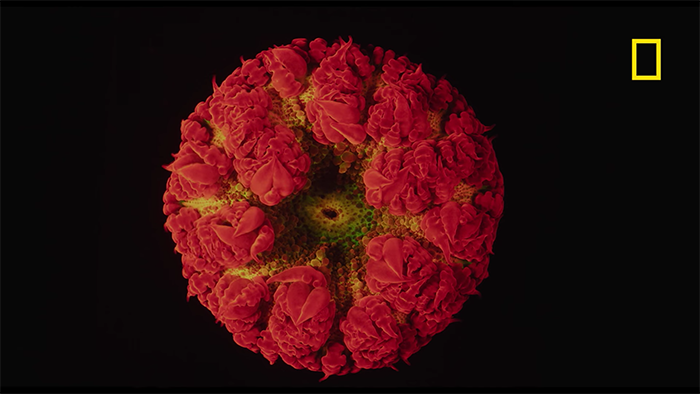
We are over the moon to share we’ve contributed coral fluorescence cinematography to the Biscayne National Park episode in the second season of National Geographic’s series America’s National Parks, narrated by Garth Brooks. America’s National Parks premieres Monday, June 5 at 9/8c on the National Geographic channel, Hulu, and Disney+.
Update 11/23/24: The Biscayne episode is now available to watch in full via YouTube:
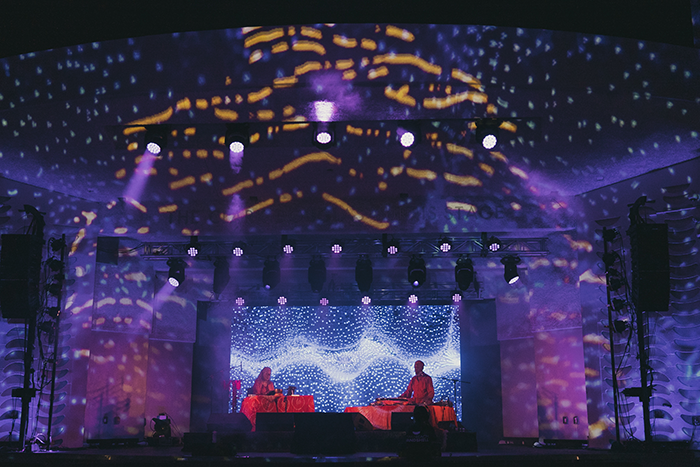
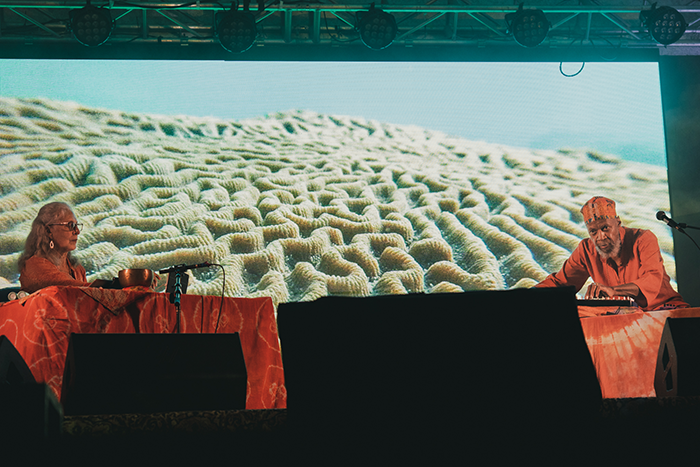
On Sunday, May 21st, the live audiovisual experience that was Aqua Garden Flow gently pulsed in and out of the historic Miami Beach Bandshell like a jellyfish on the tide. Laraaji and Arji OceAnanda‘s shimmering, joyous score of the film we created with Robert Beatty navigated mangrove stands, seagrass beds, and labyrinths of coral caves to arrive at a journey’s end shared by hundreds—one that felt like the beginning of a new era for Coral Morphologic.
We wish heartfelt thanks to Laraaji, Arji, Robert, and the team at the Rhythm Foundation / Miami Beach Bandshell for an amazing creative collaboration, immersive production, and fit venue for us all to witness Aqua Garden Flow come to life.
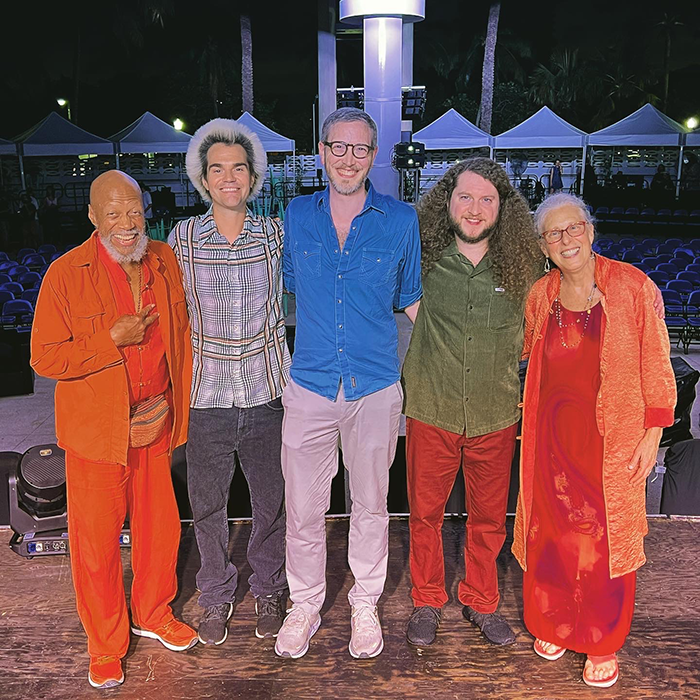
Post-Aqua Garden Flow bliss.Laraaji, Colin Foord, Robert Beatty, J.D. McKay, and Arji OceAnanda.
Watch the live performance of Aqua Garden Flow above.
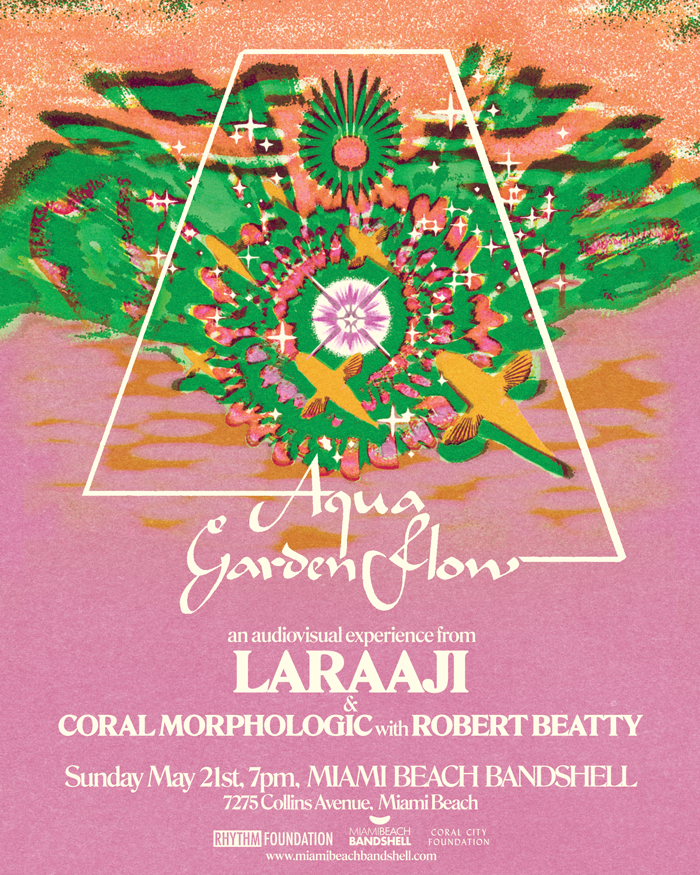
We and Rhythm Foundation are proud to announce Aqua Garden Flow, a special live audiovisual performance from legendary ambient musician Laraaji accompanied by Coral Morphologic films with animations by Robert Beatty, on Sunday, May 21st, 2023 at the Miami Beach Bandshell. Laraaji, joined by Arji OceAnanda, will perform Aqua Garden Flow, a new piece of music composed to the films of Coral Morphologic. This landmark performance is the inaugural installment in a new series of live audiovisual ambient collaborations from the Miami Beach Bandshell and Coral Morphologic as part of the Bandshell Laboratories initiative. Join us for an unforgettable, transcendent experience of healing music and film.
In a new paper published in the research journal Scientific Reports, ‘Coral persistence despite marginal conditions in the Port of Miami‘, the monitoring of sites throughout the Port since 2018 revealed periodic extremes in temperature, seawater pH, and salinity, far in excess of what have been measured in most coral reef environments. Despite conditions that would kill many reef species, we have documented diverse coral communities growing on artificial substrates at these sites—reflecting remarkable tolerance to environmental stressors. Furthermore, many of the more prevalent species within these communities are now conspicuously absent or in low abundance on nearby reefs, owing to their susceptibility and exposure to stony coral tissue loss disease.
As we hypothesized in 2014 and evidenced by our recent findings, Miami’s system of urban waterways provides an inadvertent anthropogenic laboratory whose corals hold keys to understanding how the world’s coral reefs might adapt to changing climate and water chemistry in the decades to come.
Singer Achinoam “Noa” Nini Barak performing at the I Sea You concert.
We are excited to have contributed our imagery to the official opening concert of the World Economic Forum’s Annual Meeting 2023 in Davos, entitled I Sea You, which was a powerful cultural message of unity and collaboration, as well as a call to action to protect and preserve the resilient coral reefs of the Northern Red Sea.
Watch thefull Projections of a Coral City program above.
The sun has set on Projections of a Coral City, our largest installation to date, and we are thankful for everyone who made this monumental work possible. From the Knight Foundation’s continued support of our mission, to the collaborative spirit of the Arsht Center, to the hundreds of thousands of people who witnessed this installation: we are eternally grateful.
Projections of a Coral City was the 15-year culmination of our goal to create a new mythology for the city of Miami — one that tells the story of past, present, and future sea-level rise and fall and the ouroboros of architectural development — of the ancient coral reef tract’s calcium carbonate structures and its re-use millennia later in concrete skyscrapers of present day. We hope that Projections of a Coral City shed light on the sea-level rise projections referenced in the project’s title, and how the City’s buildings and infrastructure might be reclaimed by coral as an artificial reef should humanity not act to prevent and mitigate the effects of climate change, to which Miami is among the most vulnerable cities on Earth.
Special Thanks to the Knight Foundation, whose generous support made POACC possible; the Adrienne Arsht Center for the Performing Arts, who graciously hosted the event; the dream team of creatives that helped us bring POACC to life; and Light Harvest / A3 Visual for the absolutely stunning projection display.
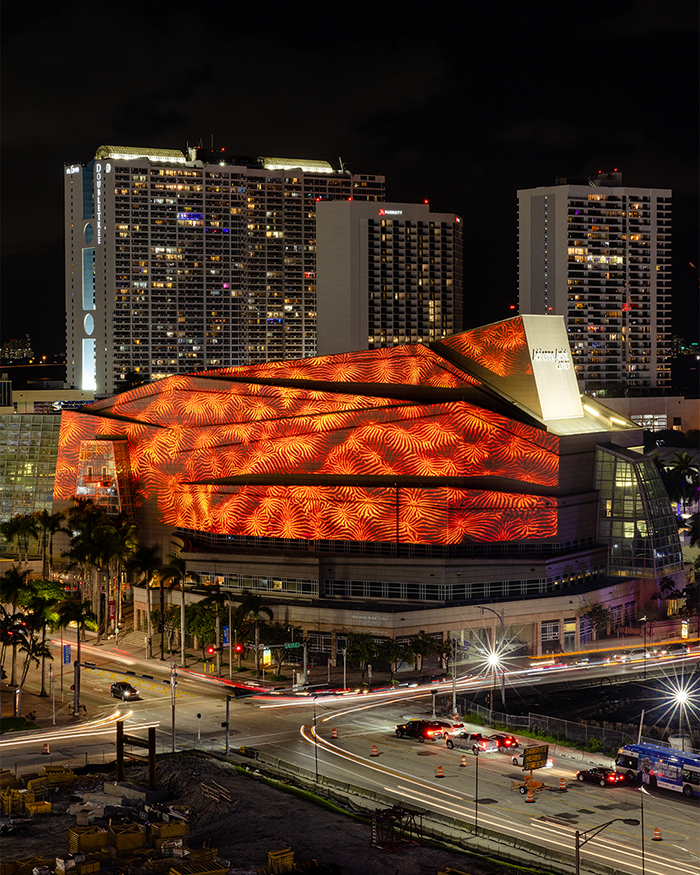
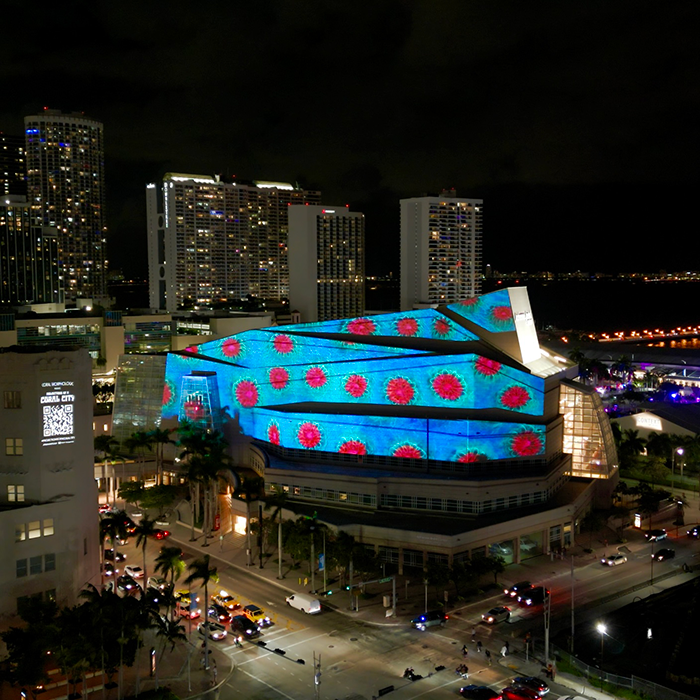
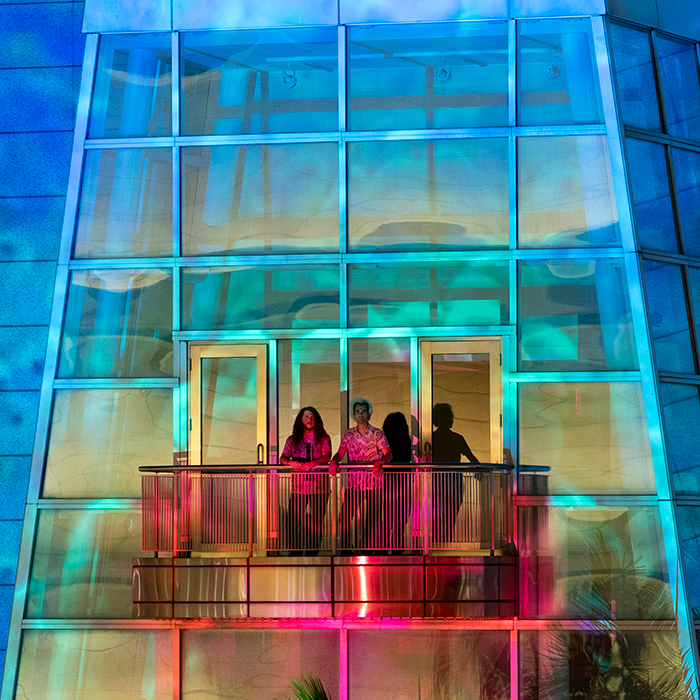
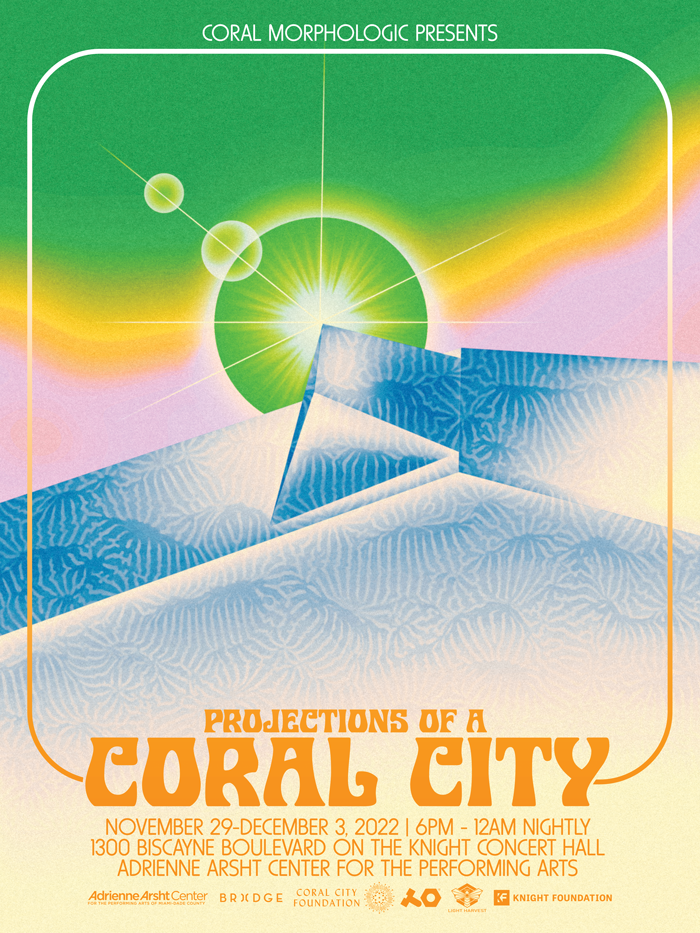
We are ecstatic to announce Projections of a Coral City, a large-scale projection-mapping installation to be presented on the exterior of the Knight Concert Hall nightly, 6PM-12AM, during Miami Art Week from Tuesday, November 29 through Saturday, December 3, 2022. Projections of a Coral City, featuring macroscopic images of corals native to Miami and from around the world, is a monumental artwork and the largest projection of corals ever presented globally. Projections of a Coral City is made possible through the support of the John S. and James L. Knight Foundation.
Miami is a coral city. Built with marine limestone mined from the Everglades, its concrete skyline stands like corals colonizing the fossilized reef ridge on which the city was built. Miami and its maritime environment are inextricably connected geologically, historically, culturally and economically. Engaging residents and visitors with Miami’s coral reefs and waters connects them to the literal foundation of the city and to its future.
The corals featured in Projections of a Coral City were grown on flat tiles and 3D-printed scale models of the Knight Concert Hall over many years in our Miami laboratory, and subsequently photographed and enlarged to envelop the building’s southwest side. These aquacultured corals include the colorful, native Ricordea florida corallimorph. Corallimorphs are an understudied group of soft corals that scientists predict will proliferate in a world where oceans are acidified and stony corals can no longer calcify into reefs. Projections of a Coral City reimagines the Knight Concert Hall’s terraced form designed by architect César Pelli as an ever-morphing coral head and, as the sea-level rise projections referenced in the project’s title portend, suggests how the City’s buildings and infrastructure might be reclaimed by coral as an artificial reef should humanity not act to prevent and mitigate sea-level rise.
An ambient soundscape foreshadowing the City’s future by Coral Morphologic and Nick León will play in tandem with the projections on the Arsht Center’s Thomson Plaza for the Arts on Biscayne Boulevard.
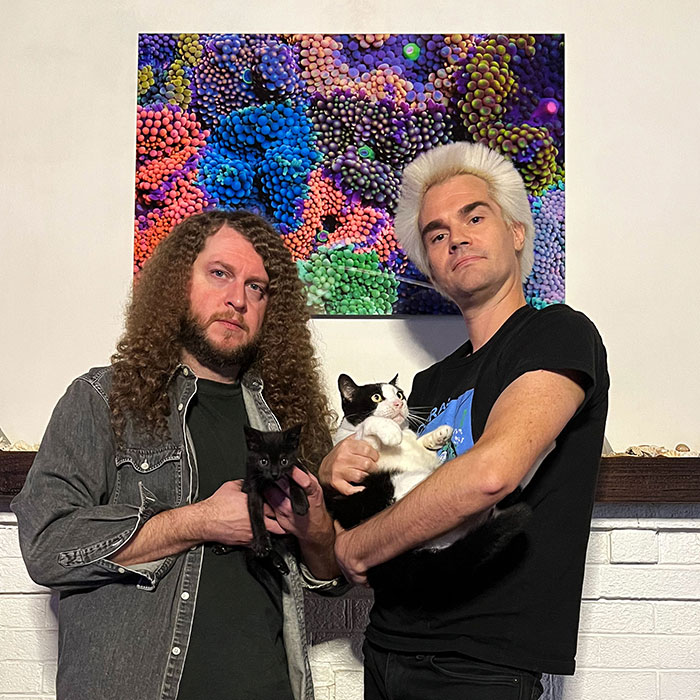
Today, October 6th, marks 15 years of Coral Morphologic! Here’s us celebrating @ CM HQ with the lab cats. Thank You to everyone who has shown us love and support over the years: you know who you are and we love you too!
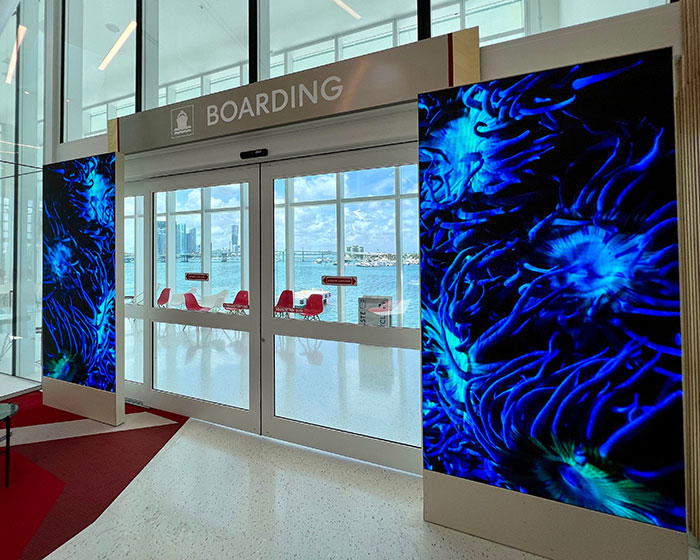
Threshold: a series of gently-swaying coral archways lead departing passengers from land to sea.
We are excited to unveil Threshold, a new Coral Morphologic video work and our second public art installation at PortMiami. Threshold was commissioned by Miami-Dade Art in Public Places in conjunction with Virgin Voyages for the recently-built Terminal V. Take a quick tour below:
Rescue a Reef explains what they hope to achieve in this exciting new chapter in Coral City:
‘One year ago, the Rescue a Reef team from the University of Miami outplanted colonies of staghorn coral (Acropora cervicornis) at the Coral City Camera to create a public-facing restoration site and better understand how corals adapt to urban environments. We were thrilled with their success! To expand on this small-scale experiment, we outplanted twenty-five colonies of elkhorn coral (Acropora palmata) at the CCC and will monitor their growth, productivity, and resilience over the next year! The new corals consisted of five different genotypes that were put through heat stress testing by UM and the Shedd Aquarium, and included some of the most successful in the face of rising temperatures. This experiment was designed to be a springboard for expanded research and explore novel ways to garden and restore corals in urban environments. Along with a greater understanding of our Coral City, we hope that having a public-facing coral restoration site will help communities make a stronger connection with corals and give them more incentives to fight to protect them!’
As reported in the Miami New Times, in June 2022, a combination of heavy rains and an ancient crumbling seawall in the process of reinforcement along Star Island’s southwest corner resulted in its collapse. The collapse was discovered by our colleagues at NOAA who arrived there by boat to study the nature and resilience of the urban corals in North Biscayne Bay. This is in addition to sites on the north and south side of the MacArthur Causeway and the east end of PortMiami near the Coral City Camera. Brain corals from these sites were analyzed and published ‘Molecular Mechanisms of Coral Persistence Within Highly Urbanized Locations in PortMiami’ in 2021, the first paper of its kind to offer an explanation for the success of these corals compared to their offshore counterparts.
Coral Morphologic first began exploring these urban habitats after documenting an unusual Acropora sp. inside Government Cut in 2009 which totally upended the idea of what an ‘ideal’ habitat was for these endangered stony corals. We subsequently started exploring areas deeper in North Biscayne Bay and found surprisingly robust populations of reef building corals. When a historic cold snap in January 2010 left them unphased (while the Florida Keys nearshore corals were all but wiped out), we began to suspect that the corals in these habitats were truly special, and scientifically valuable for research.
Colin first observed the Star Island seawall on Feb 14th 2013 when Gloria Estefan’s son Nayib asked him to document the marine life living along their riprap seawall (she was so happy to learn how healthy it was!). He was amazed by the life on these rocks, and how many more fish there were around them then on the neighboring seawall that lacked riprap. But upon closer inspection there were several very large Orbicella faveolata encrusted directly on it and multiple large brain corals at the base of it. This seawall at 40 Star Island Drive was likely the oldest seawall in Miami, possibly dating back to its development in the 1920s.
When the SCTLD (Stony Coral Tissue Loss Disease) outbreak took off in 2015 we observed that these urban corals seemed to be more resistant to it, and would often survive with partial mortality. With these anecdotal observations, Dr. Ian Enochs of NOAA reached out to us about setting up a formal investigation to see how these corals might differ from their offshore counterparts.
In early 2020 with the launch of the Coral City Camera, the CURES (Coral Urban Research Experimental Site) nursery was set up within view at the east end of Port Miami where research continues to this day (and now serves as an experimental research site for Rescue a Reef to ‘stress adapt’ their corals to help find more resilient strains that will be useful in the restoration of Miami’s nearshore reefs).
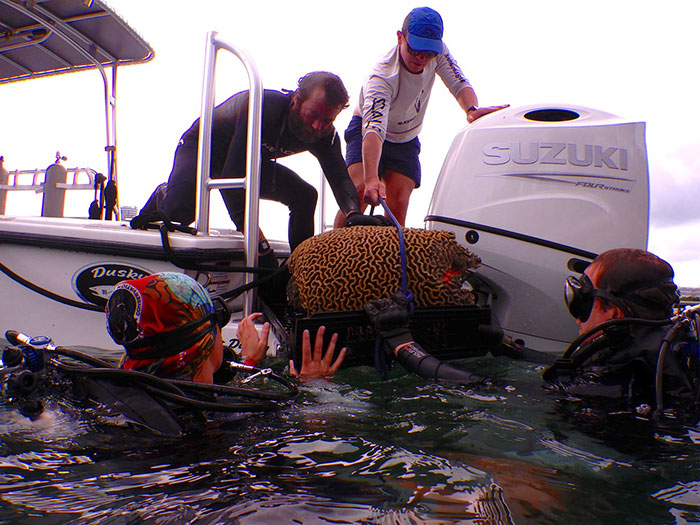
After NOAA and the University of Miami performed the rescue of the corals at 40 Star Island in July, they repatriated a number of them to an offshore ‘Spawning Hub’ on Rainbow Reef where they will be able to spawn with other members of their species and hopefully provide some other their resilient genetics and microbiome to the next generation. Fifteen colonies and fragments of corals were also brought to the Coral City Camera site at PortMiami where they were cemented down by UM scientists. Several weeks later, all these transplanted corals have survived and appear to be settling in nicely to their new urban coral community.
Update 11/2/22: Watch a follow-up feature on the seawall collapse and coral rescue with ABC WPLG Local 10 anchor / reporter Louis Aguirre: