coral morphologic header


Archive for the ‘Natural History’ Category

Acadian Rockweed

Saturday, July 19th, 2008
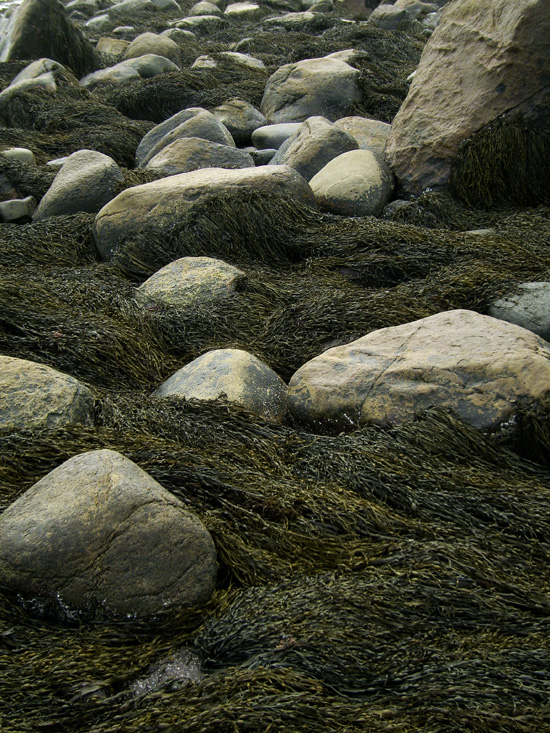
Last week I had the opportunity to shoot some photos of the Maine seashore while on vacation. The Gulf of Maine is known for many things, mainly lobsters, but some less glamorous life-forms are attracting some renewed attention for good reason in this time of finite resources.

Rockweed (Ascophyllum nodosum), a type of fucoid seaweed adorns the barnacled, wave-worn Appalachian rocks along some 3,000 miles of New England seashore. Rockweed serves as a habitat for small invertebrates and fish, which in turn provide nourishment to the many seabirds that make the Gulf of Maine a perfect migratory outpost. Essentially, Rockweed enables an entire food-chain of organisms normally incapable of surviving extreme weather, temperature, and voracious predators to thrive and in turn create a most healthy shoreline.

European colonists quickly found Rockweed to be an excellent agricultural fertilizer, and began harvesting the seemingly endless supply of this “weed.” These days, Rockweed is processed to extract carageenan-like compounds called “alginates” that are used as stabilizer/thickener agents in some our most common day-to-day products like cosmetics, toothpastes, and soups. While commercial benefits of this seaweed are vast, a sustainable harvest is of high priority, considering over-harvesting this macro algae can have negative effects on ecosystems both above and below the water.
Mangrove Propagules… Ready to Drop

Wednesday, May 21st, 2008

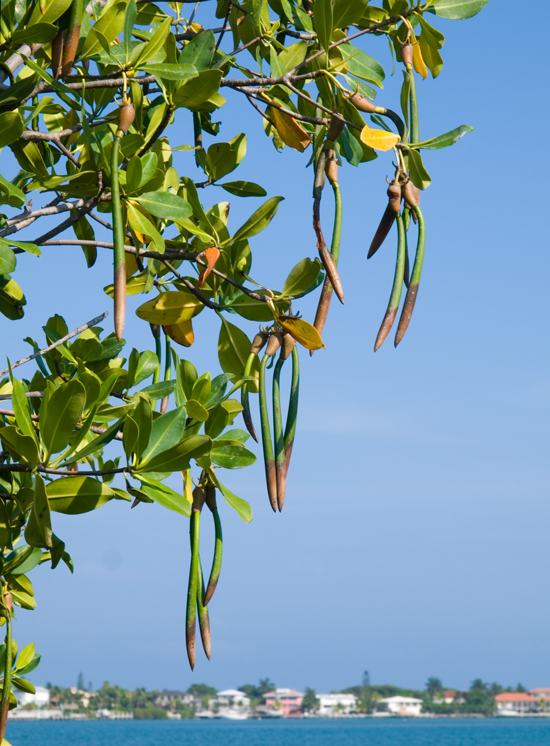
Red Mangrove with nearly mature propagules in front of Duck Key, FL.

It’s that time of the year again in the Florida Keys. Summer is all but here and the red mangroves (Rhizophora mangle) are almost ready to drop their mature propagules (a seed pod if you will). These propagules are quite unique in that they become fully formed “plants” even before they fall off the tree (They have already germinated while on the tree itself). When mature, they drop into the water below and float iceberg-style, carried to new locales by water currents, wind, tides, and storms. In ideal circumstances the propagule eventually finds a soft bottom in which to take root. The leaves form from the top of the propagule. Eventually it will produce the iconic mangrove prop root “legs” that help facilitate gas exchange and structural support.

This form of reproduction makes propagating mangroves in saltwater aquaria a relatively easy task. All they need to grow is for the top 1/3 of the propagule to be above the water surface, bright light, a deep sand bed, and occasional “mistings” of freshwater from a spray bottle to wash off built-up salt deposits. These are trees of course, so expect them to eventually grow quite large.

Mandarinfish (Part 2)… Mini Spearguns VS. The Status Quo

Saturday, May 10th, 2008

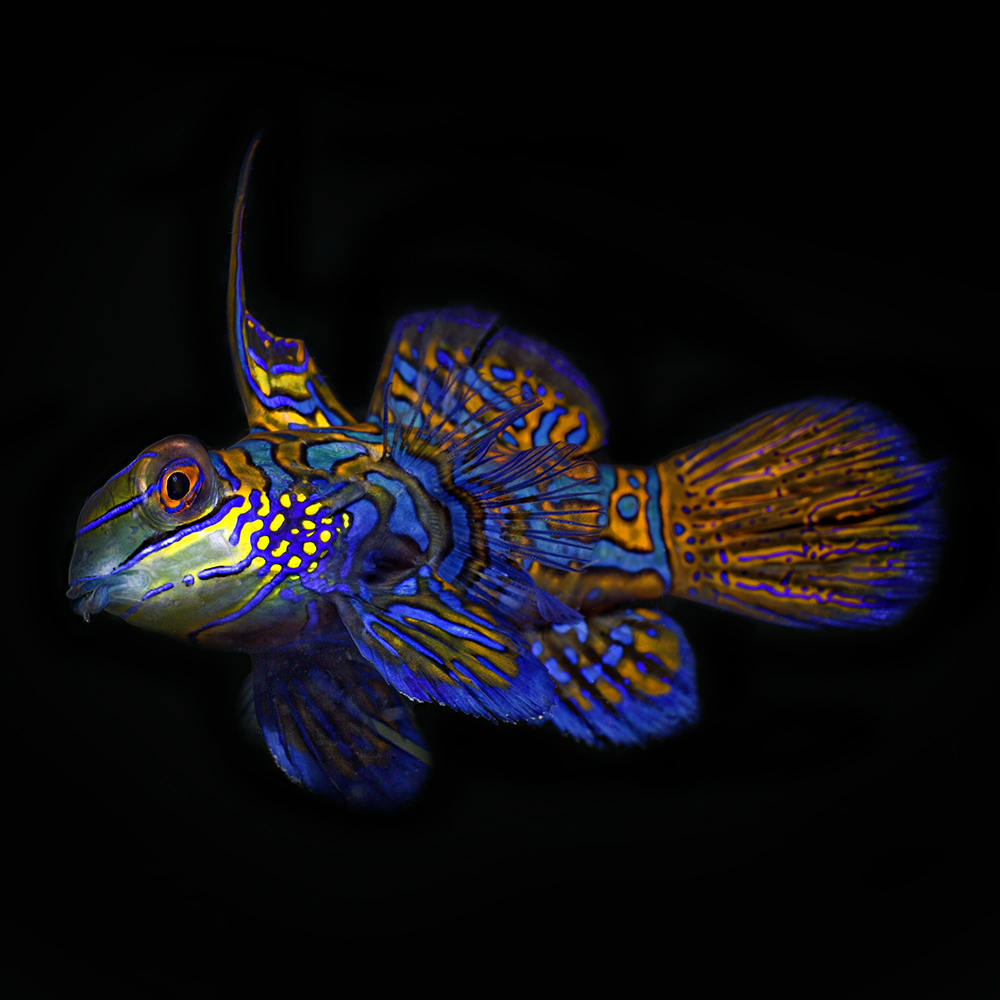
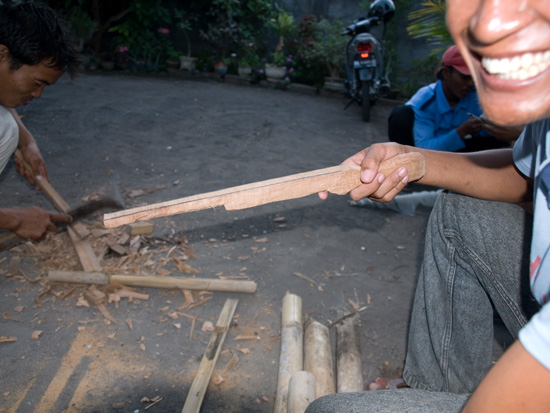
In the second installment of the mandarinfish saga, I describe a unique method of catching the blue mandarin dragonet (Synchiropus splendidus) that doesn’t involve using cyanide or nets. It involves using a teeny-tiny spear gun to (more-or-less) harmlessly capture this beautiful fish. It may sound barbaric, but I conclude that it is relatively harmless, and a less harmful alternative to sodium cyanide poisoning.

Click here to read more about this novel ornamental fishing technique…

Mandarinfish (Part 1)… A Natural History Primer

Saturday, May 3rd, 2008

From August 2006 until April 2007 I lived in Bali, Indonesia working as an intern with the Marine Aquarium Council (MAC Indo). My primary job was writing a simple coral mariculture manual (lagoon-based) useful for local fishermen as a “how to guide”. However, I was also able to follow along on MAC’s primary duties in the field, working with the local ornamental fisherman groups throughout Indonesia.

I have finally had some free time to sift through my journals and photographs, and look forward to posting some interesting articles on the marine aquarium trade in the future.

In this first installment, I describe the natural history of the blue mandarinfish (Synchiropus splendidus) a popular reef aquarium fish. In the second installment I will go on to describe a fishing technique that doesn’t involve using cyanide or nets. It involves using a teeny-tiny spear gun to (more-or-less) harmlessly capture this beautiful fish. It may sound barbaric, but I conclude that it is relatively harmless, and a superior alternative to sodium cyanide poisoning.

Click here to read more about the natural history and courtship behaviors of the blue mandarinfish…