‘The Florist’
Monday, April 12th, 2010‘The Florist’
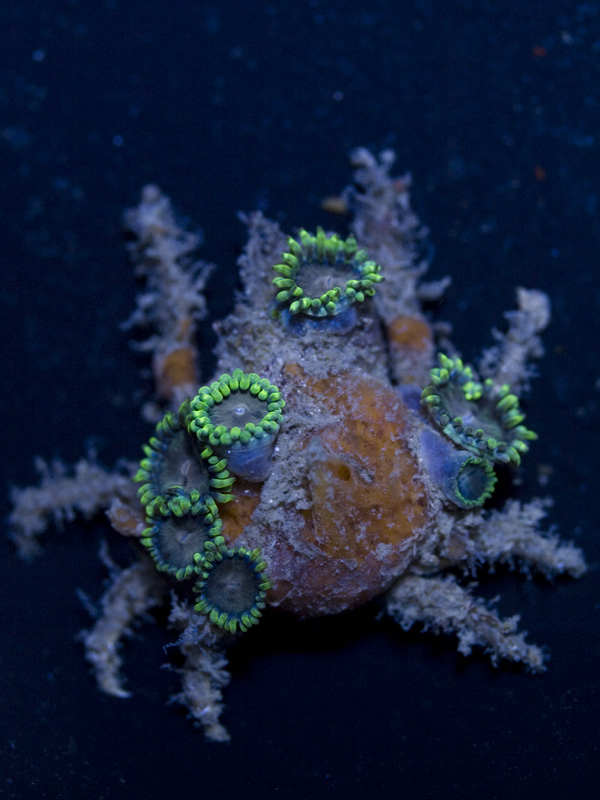
Leptopsia setirostris (Decorator Crab) scavenging amongst a Zoanthus polyp garden
Music, Video, and Aquarium
2010 Coral Morphologic
Once again we return to observe a cryptic red decorator crab (Leptopsia setirostris); this time living upon, and decorated with, zoanthid polyps (Zoanthus sociatus), close cousins to both sea anemones and corals. Zoanthus in Latin literally means ‘animal flower’. The species name sociatus refers to the fact they these flower animals live socially in dense groupings of identical polyps.
Decorator crabs demonstrate a remarkably prescient instinct to be able process the information required to successfully camouflage themselves to match their preferred habitat. Unlike the typically fast-scuttling crabs of the mainstream, decorator crabs move at a deliberately slow pace to reduce being noticed.
This particular decorator crab species boasts a brilliant red exoskeleton that it has disguised with the zoanthids. The crab has carefully nipped individual zoanthid polyps from a larger colony and placed them upon its carapace (back) where they attach down on their own and continue growing. My experience suggests that it takes at least two days for a polyp to begin attaching down to new substrate. I have yet to observe the crab going through the whole process of zoanthid ‘decoration’, but clearly it is a very patient animal.
The crab uses its small claws to pick at and remove pieces of detritus between the polyps. The animal nature of the zoanthids becomes especially apparent when the movements of the crab cause the polyps to close up in reaction. If you look carefully at the bottom right of the screen you’ll notice the periodic movements of a barnacle that these zoanthids are growing upon. Zoanthids are commonly called ‘sea mat’ due to their rubbery, encrusting morphology. They live together in interconnected colonies of cloned polyps, slowly expanding their colonies outward; growing over shells, in-between coral heads, and across shallow tide pools.