coral morphologic header


Archive for July, 2009

‘Cassiopeia 1’ @ The Collabo Show

Wednesday, July 29th, 2009

Solar Power #1

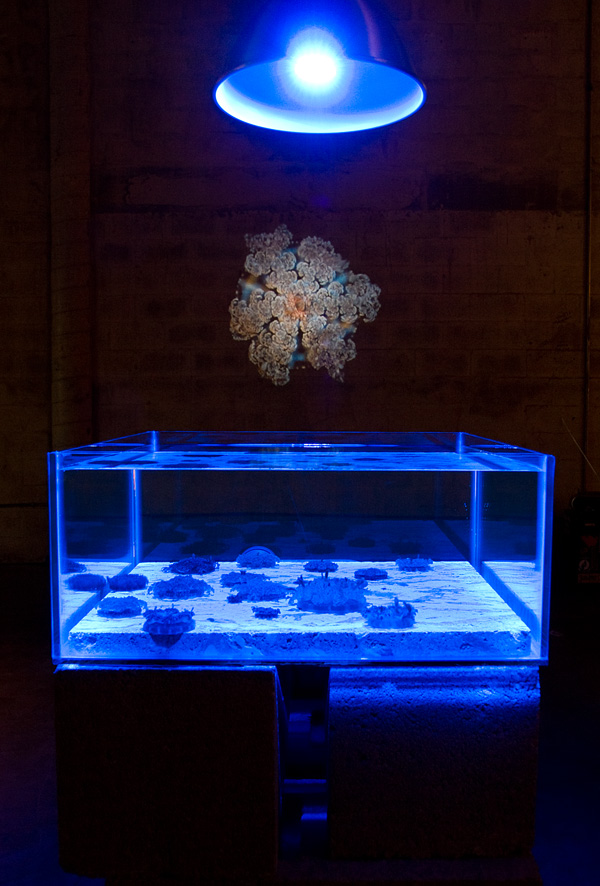
Still photo (above) of aquarium/ projection of our contribution to The Collabo Show, July 25, 2009; an installation dubbed ‘Cassiopeia 1’, featuring photosynthetic jellyfish (Cassiopea xamachana) collected in the mangrove estuary near the Virginia Key Wastewater Treatment Plant, here in Miami, FL.

The Collabo Show

Monday, July 20th, 2009

Saturday, July 25th we will be exhibiting a live aquarium and video projection in The Collabo Show, a one-night only showcase of contemporary Miami artists. 85 NW 71 Street, Little Haiti. 7PM – 12AM.

Aberrant Tissue Inflation of Diploria clivosa

Friday, July 10th, 2009

July 9, 2009

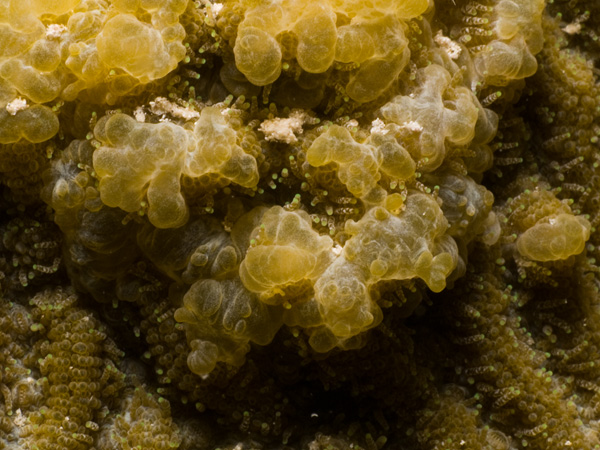
The brain coral (Diploria clivosa) colony pictured above featured several areas ranging in size from 3-6 cm that exhibited very unusual cauliflower-like tissue expansion with warty protuberances. The photo was taken offshore of South Beach, Miami, Florida.

July 7, 2009

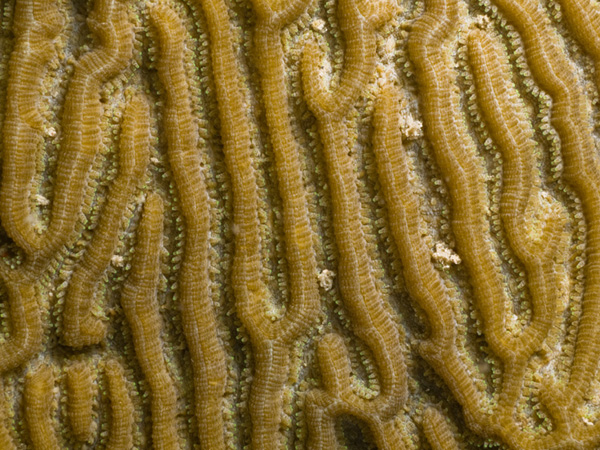
Pictured above is the normal ‘meandroid’ growth form for the brain coral Diploria clivosa. The tissue is relatively compact against the skeleton and the tentacles are visible along the inner walls of the grooves.

A Few Fish from FLL

Wednesday, July 8th, 2009

July 7, 2009

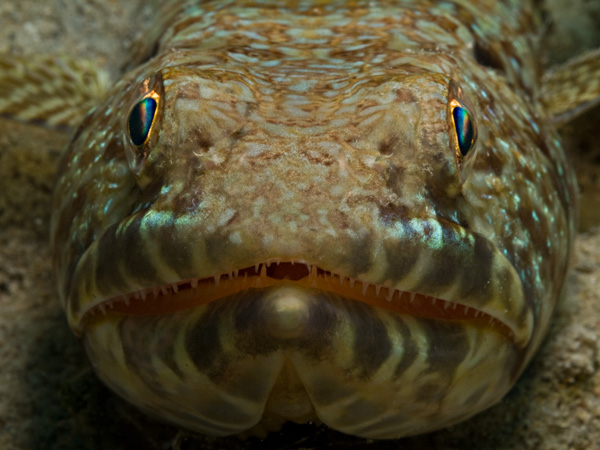
A toothsome ‘sand diver’ lizardfish Synodus intermedius waits patiently for a smaller fish to come a little bit closer.

On Tuesday morning, our newest team member Graham and I made a shore dive just underneath the flight path of the Fort Lauderdale International Airport (FLL). I’d read that there was some decent shore diving in the area, but I have very little experience in this neck of the woods. 95% of all my dives in Florida have been in the Keys. It was a nice change of pace, although if you go yourself, don’t expect to see the level of diversity and coral coverage you might find further south or offshore.

(more…)

Summer Solstice Birthing

Monday, July 6th, 2009

Baby flower anemones attached near the base of "momma"

Two new-born Epicystis crucifer anemones are attached to Valonia sp. bubble algae at the base of their “mother” anemone.

On the evening before the summer solstice, we noticed that several of our favorite flower anemones (Epicystis crucifer) were exhibiting classic signs of stress (gaping mouth, regurgitation, decreased turgor pressure). However, all the water parameters suggested nothing out of the ordinary, so we simply decided to leave them alone, while monitoring them closely. The following morning we began finding tiny flower anemones attached to the aquarium bottom nearest to  the anemones that had appeared stressed. By this time though, the adult flower anemones had returned to their normal, healthy condition as if nothing had occurred. It was clear that the ‘stress’ that they were going through was a precursor to birthing dozens of 2mm babies from their mouths. As you can see from the photos, these babies are practically fully-formed, miniature versions of the adults.

To our knowledge, this is the first documented case of Epicystis crucifer birthing in a captive (or wild) environment. Live birth is not uncommon for many other anemone species, and given the local abundance of this species, it makes sense. It still remains unclear whether these babies were brooded internally from sexual reproduction, or whether they are asexual clones. Every little piece of information that we can gather on the life cycle of these beautiful animals is an important advance.

(more…)

Corynactis Quest: Dive #3 in the French Mediterranean

Thursday, July 2nd, 2009

Dive Site #3 June 4, 2009

Success! The Quest is complete.

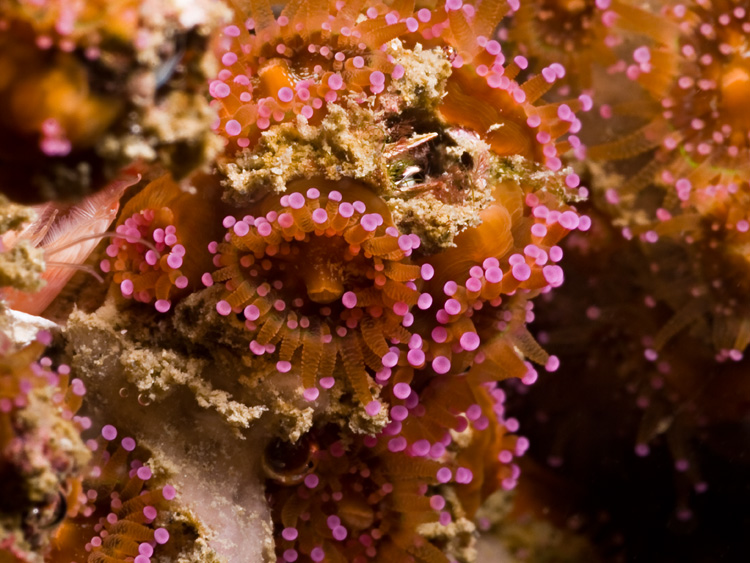
For the third dive we had a definitive lead on where we’d find the Corynactis viridis. My friend Laurent Foure is the curator of the public aquarium in Cap d’Agde; about 2.5 hours westward along the coast of the  Mediterranean. Laurant is an avid diver, and is very familiar with the marine environment nearby his aquarium. He was able to connect us with a dive operator who could take us by boat to a dive spot inhabited by Corynactis viridis.

(more…)